Abigail Spanberger Sworn In as Virginia’s First Female Governor
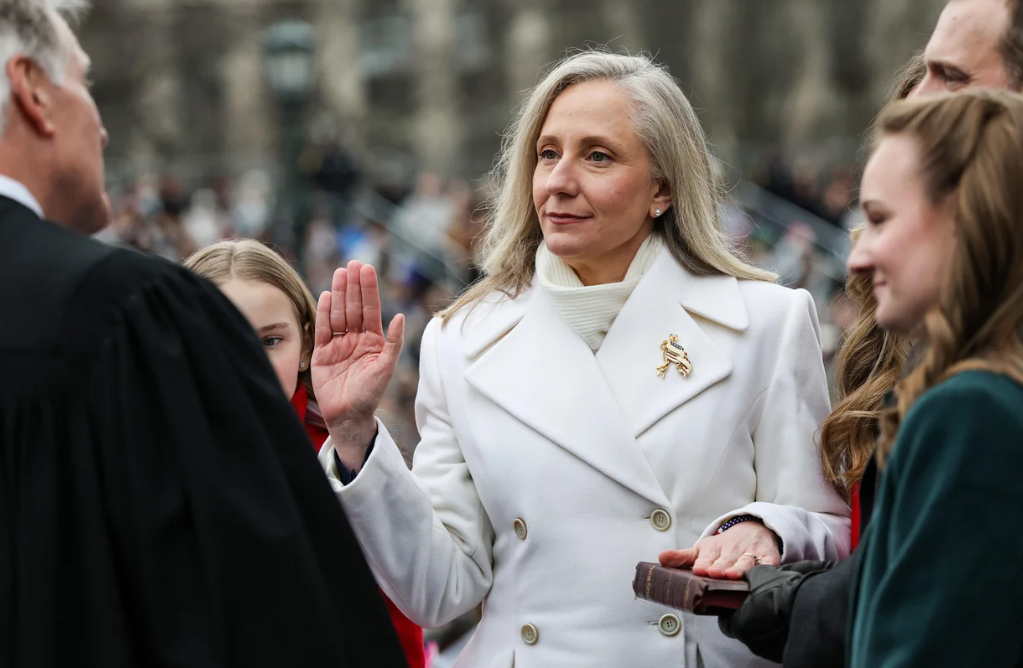
On January 17, 2026, Abigail Spanberger was sworn in as Virginia’s first female governor, marking a historic moment in the state’s more than 250-year history. The Democratic leader took the oath of office at the Virginia State Capitol in Richmond, surrounded by supporters, former governors, and national figures. Her inauguration promised a new chapter for Virginia’s leadership and policy direction.
Historic Inauguration at State Capitol
Spanberger became Virginia’s 75th governor at a ceremony held on the South Portico of the historic state Capitol. She succeeded Republican Glenn Youngkin after winning the 2025 election by a decisive margin. The noon ceremony took place in cool weather but drew enthusiastic crowds who witnessed a milestone in Virginia’s political history.
In her speech, Spanberger emphasized the need for unity across political divides. She quoted Patrick Henry, one of Virginia’s earliest governors, urging cooperation over partisanship. Many attendees noted the symbolic weight of her victory as the first woman to lead the commonwealth since its founding in 1776.
Spanberger wore white at the ceremony, a nod to the women’s suffrage movement and those who fought for women’s right to vote and lead. Her attire and her words underscored the historical significance of the occasion.
Historic Leadership Team
Spanberger was joined at the event by fellow Democrats who also made history. Ghazala F. Hashmi was sworn in as Lieutenant Governor, becoming the first Muslim woman elected to statewide office in the U.S. Jay Jones took the oath as Virginia’s Attorney General, marking another historic first as the state’s first Black attorney general.
Former governors and political leaders attended the event, including Virginia’s own L. Douglas Wilder, who celebrated his 95th birthday at the ceremony. National figures and members of Congress also gathered to show support for the new administration.
Early Actions and Agenda
Within hours of taking office, Governor Spanberger signed executive orders aimed at meeting key campaign promises. These orders focused on issues such as affordability for families, strengthening public education, and reshaping parts of state government to better serve citizens. Spanberger framed these actions as the start of a pragmatic agenda for results.
Spanberger has prioritized actions that respond to everyday concerns, such as rising living costs and expanding access to essential services. She also signaled a desire to shield Virginia’s economy and healthcare system amid federal policy changes and uncertainties in Washington, D.C.
Reactions and Significance
Local and national leaders praised the peaceful transfer of power and Spanberger’s message of unity. Many lawmakers from both parties attended the inauguration and expressed optimism about working together on shared priorities.
Citizens and onlookers described the event as a hopeful moment for the state’s future. Some noted that electing a woman governor could inspire the next generation of leaders, making political leadership more inclusive.
Spanberger’s victory and swearing-in represent not just a change in party leadership but a broader shift in political engagement across the commonwealth. Democrats now control the governorship and hold increased influence in state government, a significant contrast to recent years when Republicans held key positions.
What’s Next
Following the inauguration, Spanberger and her team will begin implementing their policy agenda. The new governor has outlined goals that include addressing economic concerns, adjusting regulatory frameworks, and enhancing services for Virginians of all backgrounds.
The administration is expected to host further events and public engagements as it settles into the new term. Spanberger’s leadership style — which emphasizes unity and pragmatic solutions — will be closely watched by residents and political observers throughout the state and beyond.