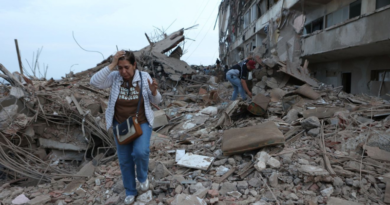
7.1 and 7.5 Magnitude Earthquakes Strike Venezuela
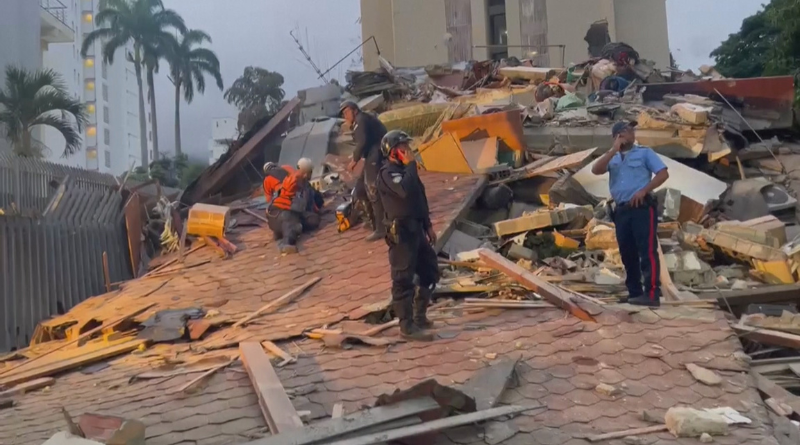
Back-to-back earthquakes measuring 7.1 and 7.5 magnitude struck Venezuela’s northern coast on Wednesday, June 24, 2026, causing buildings to collapse and triggering widespread tsunami alerts. The powerful seismic events occurred less than a minute apart near the coastal town of Morón and were felt extensively across the region. Regional emergency teams launched immediate search-and-rescue operations as multiple aftershocks shook the area.
Seismic Event and Double Quakes
According to data compiled by the U.S. Geological Survey (USGS), the two major earthquakes occurred in rapid succession. The first event, initially reported as a 7.1 magnitude foreshock, was centered along Venezuela’s Caribbean coast just west of Morón. Less than a minute later, a massive 7.5 magnitude mainshock struck the region, located approximately 16 kilometers southwest of Morón.
The mainshock occurred at a relatively shallow depth of 10 kilometers, which significantly intensified the surface shaking felt by residents on the ground. Seismologists noted that shallow earthquakes of this magnitude are highly efficient at transferring energy to the surface, resulting in severe tremors over a wide geographic area. Multiple smaller aftershocks have continued to ripple through the coastal fault lines following the main event.
Structural Collapses and Urban Evacuations
In the capital city of Caracas, located roughly 150 kilometers east of the epicenter, the violent tremors caused partial building collapses. The damage was particularly severe in the high-density Altamira and Palos Grandes neighborhoods, where older concrete structures suffered structural failures. Emergency crews have cordoned off several blocks where falling debris and columns of dust rose over the city streets.
The intense, prolonged shaking prompted thousands of shocked residents to immediately evacuate office buildings and apartment complexes. Crowds of people rushed into open streets and public plazas to seek safety as buildings swayed visibly against the skyline. Local emergency personnel are actively patrolling the streets, instructing citizens to stay clear of overhead power lines and high-rise facades.
Infrastructure Damage and Emergency Response
The dual earthquakes have caused significant disruption to critical regional infrastructure and public utilities. Aviation authorities suspended all flights at the main international airport serving Caracas due to visible cracks in the terminal structures and runway surfaces. Additionally, localized electricity blackouts and telephone service outages have been reported across several northern states, complicating communication.
Venezuela’s Interior Minister Diosdado Cabello addressed the nation on Wednesday, urging citizens to remain calm and stay outdoors while safety assessments are conducted. Emergency response teams, including firefighters, civil defense units, and medical personnel, are actively working to evaluate building integrity. Paramedics are currently transporting multiple injured citizens to nearby hospitals, though a comprehensive casualty count has not yet been finalized.
Tsunami Alerts and Coastline Advisories
The severity of the undersea and coastal tremors prompted the U.S. Pacific Tsunami Warning Center to issue immediate threat assessments. Officials warned of possible hazardous waves along the immediate coastlines of Venezuela, Bonaire, Curaçao, and Aruba. Coastal residents in these regions have been advised to move to higher ground until the surge threat has passed.
Additionally, official tsunami advisories were issued for several territories in the northern Caribbean, including Puerto Rico, the U.S. Virgin Islands, and the British Virgin Islands. Emergency management agencies in these islands are actively pulling people away from beaches, active harbors, and low-lying inlets. Maritime authorities have advised boat operators to remain in deep water as sea level fluctuations and strong currents are expected to persist.
Regional Seismicity and Building Standards
The northern coast of Venezuela sits along the boundary between the Caribbean and South American tectonic plates, a region with a long history of significant seismic activity. Tectonic movement along this boundary has historically produced major earthquakes, prompting the gradual implementation of stricter building codes in urban areas. However, many older residential and commercial properties in Caracas remain vulnerable to the intense forces generated by a magnitude 7.5 event.
Structural engineers and urban planners have long warned that non-reinforced masonry and older high-rises are highly susceptible to damage during major quakes. The current disaster will likely prompt a renewed review of infrastructure resilience and emergency preparedness across the country. Meanwhile, search teams are continuing their physical assessments of affected structures, working around the clock to ensure public safety.