OPEC+ to Maintain Current Oil Production Levels in November
By Aldgra Fredly
Seven of the world’s largest oil-producing countries said on Oct. 4 that they have agreed to keep their oil production levels unchanged in November, as the ongoing war in Iran continued to push oil prices higher.
Core members of the Organization of the Petroleum Exporting Countries (OPEC+)—Saudi Arabia, Russia, Iraq, Kuwait, Kazakhstan, Algeria, and Oman—said they would maintain their September 2026 required oil production levels throughout November.
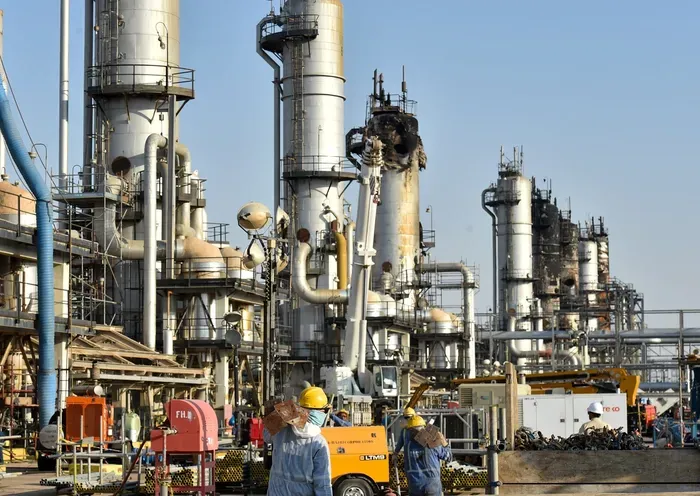
According to an OPEC+ statement, Saudi Arabia has the highest production target among the seven nations at 10.478 million barrels per day, followed by Russia at 9.949 million barrels per day and Iraq at 4.431 million barrels per day.
The alliance made the decision during a virtual meeting on Oct. 4. They were scheduled to hold another meeting on Nov. 1 to review oil market conditions.
Brent crude futures increased 5 cents to $102.30 per barrel on Oct. 5, while U.S. West Texas Intermediate crude fell 49 cents to $90.62 per barrel.
The seven core OPEC+ members pumped 25 million barrels per day in August, up 630,000 barrels per day from July, yet still roughly 5 million barrels per day below prewar levels in February, OPEC data show.
Meanwhile, the Group of Seven (G7), comprising seven major advanced economies—Canada, France, Germany, Italy, Japan, the United Kingdom, and the United States—agreed on Oct. 2 to release up to 100 million barrels of diesel and crude oil from their strategic reserves over the next four months to help curb high oil prices.
In a joint statement, the G7 pledged to coordinate refinery maintenance schedules to prevent simultaneous capacity shutdowns and temporarily boost utilization rates. The bloc also called for engagement with countries with large refining capacities to boost global output of refined products.
“Facing unprecedented volatility in oil markets—with surging prices threatening economic stability and the well-being of our citizens—we have agreed on decisive, coordinated measures to stabilize immediate energy supplies, shield households and businesses from price shocks, and strengthen the long-term resilience of global energy systems,” the G7 said.
The ongoing war in Iran has driven fuel prices higher by disrupting shipping traffic through the Strait of Hormuz, a critical energy chokepoint through which about 20 percent of global oil supplies passed before the Iran War.
Iran has launched attacks against commercial ships attempting to pass through the Strait of Hormuz, while the U.S. military maintained a blockade on Iranian ports in response.
Last month, Iran proposed a seven-day plan to reopen the Strait of Hormuz in exchange for resuming nuclear talks with the United States. President Donald Trump rejected the proposal.
“They want to make a deal, but it is not the deal that I want to make. It is what we would have maybe agreed to a year ago,” Trump told Axios in a phone interview on Sept. 27. “They overplayed their hand.”
Trump has previously said that any deal with Iran must include terms acceptable to the United States and ensure that Tehran cannot be allowed to have a nuclear weapon.
Andrew Moran and Reuters contributed to this report.