Chemical Leak Prompts Evacuations and Shelter Orders in Toledo, Ohio
A hazardous chemical leak at an industrial facility in North Toledo, Ohio, forced hundreds of residents to evacuate their homes late Tuesday night and prompted a wider shelter-in-place order Wednesday morning.
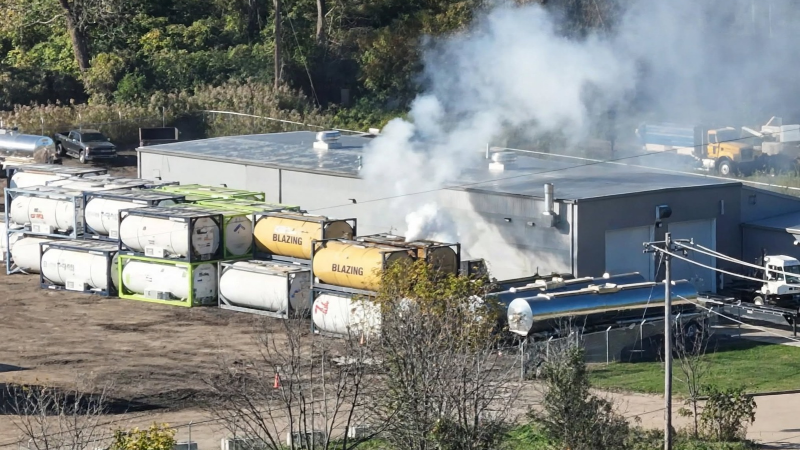
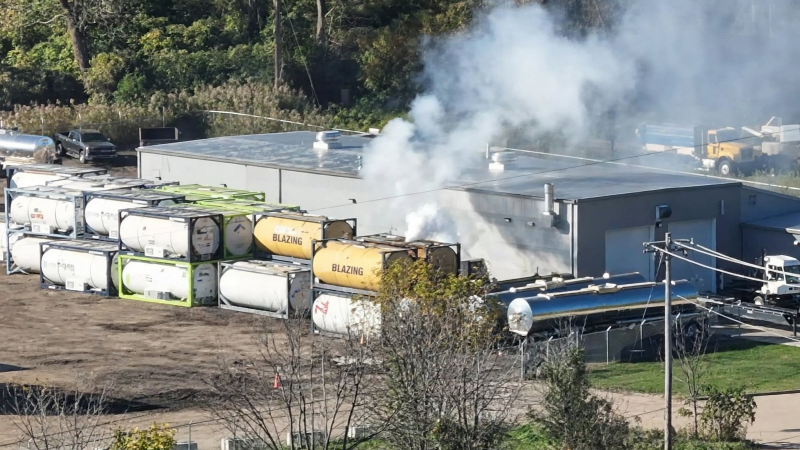
Authorities issued the emergency directives after a 5,500-gallon tank began releasing a large plume of glycidyl methacrylate at MC Tank Transport on Progress Avenue. While Toledo Mayor Wade Kapszukiewicz initially stated during a morning briefing that a tank explosion had occurred, city spokesperson Rachel Hart later clarified that no explosion took place and that the emergency involved an active chemical release.
Chemical Release Details and Official Clarification
The emergency began around 9:30 p.m. Tuesday at the MC Tank Transport terminal located at 1266 Progress Avenue in North Toledo. According to city officials, the facility takes delivery of industrial chemicals, stores them briefly at the terminal, and transports them to other destinations. The compromised tank holds a capacity of 5,500 gallons and contained glycidyl methacrylate.
During a Wednesday morning press conference, Mayor Kapszukiewicz initially described the Tuesday night event as a chemical tank explosion. However, Hart subsequently told reporters that no explosion had occurred at the site. Instead, the tank experienced a major leak and continued venting the chemical into the surrounding air through Wednesday morning.
MC Tank Transport, which is based in Arkansas, released a statement confirming that the tank held glycidyl methacrylate. The company described the substance as an industrial monomer used to improve the performance of plastics, paints, and coatings. Company representatives stated they were traveling to Toledo on Wednesday to assess the scene in person and had mobilized specialized emergency response teams to assist local fire crews.
Because of the volatile properties of glycidyl methacrylate, Mayor Kapszukiewicz warned that the damaged tank carried a potential explosion risk for up to 12 hours following the initial leak. Due to that hazard, firefighters and hazardous materials teams initially held back from approaching the tank directly. Emergency personnel deployed drones to monitor the tank and evaluate the surrounding industrial corridor from a safe distance while waiting for the volatile window to pass. Later Wednesday morning, the mayor noted that the chemical was still venting from the container but appeared less volatile than officials initially feared.
Evacuation Zones and Community Disruptions
Toledo Fire and Rescue first ordered an immediate mandatory evacuation at 10:48 p.m. Tuesday for everyone within a one-mile radius of 1266 Progress Avenue. City officials reported that the one-mile evacuation zone covers approximately 983 residents.
As the chemical release continued overnight, fire officials expanded protective measures at 4:24 a.m. Wednesday by issuing a shelter-in-place order for everyone within a three-mile radius of the facility. The three-mile boundary stretches across parts of northern Toledo and reaches across the state line into southern Michigan. Across the international border in Windsor, Ontario, municipal officials noted that the risk to Canadian residents remained very low because winds were blowing in the opposite direction.
Inside the three-mile shelter zone, authorities instructed residents to remain indoors, bring pets inside, lock all windows and doors, and shut off heating and air conditioning systems that draw in outside air. Officials also advised residents outside the immediate three-mile zone to take the same precautions if they detected an unusual odor. Both the mandatory evacuation and the shelter-in-place directives remained active past midday Wednesday.
Dense morning fog and calm wind conditions across the Toledo area complicated visibility on Wednesday. City officials cautioned residents that natural weather fog could not be visually distinguished from the chemical plume, urging the public not to rely on how the air looked when deciding whether to go outside.
The emergency caused widespread disruptions across the city on Wednesday morning. Toledo Public Schools and Washington Local Schools both canceled classes for the day out of precaution. Law enforcement officers blocked access to several roads near the industrial corridor, including Enterprise Boulevard between Stickney Avenue and Benore Road. Authorities also halted traffic along nearby railway lines until hazardous materials crews could clear the scene.
To assist displaced families, local authorities opened a temporary emergency shelter at Shoreland Elementary School. In addition, American Red Cross volunteers and Toledo Area Regional Transit Authority buses staged at a Meijer parking lot off East Alexis Road to provide warm shelter and support for evacuees.
Deputy Injured and Public Health Guidance
One law enforcement officer suffered injuries during the initial emergency response Tuesday night. According to Mayor Kapszukiewicz, a Lucas County sheriff’s deputy was injured while responding to the scene around 9:30 p.m. The deputy sustained non-serious injuries and was able to drive himself to a local hospital for medical evaluation. No other injuries among emergency personnel, facility workers, or nearby residents had been reported as of Wednesday afternoon.
Public health officials spent Wednesday morning testing local air quality to measure the concentration of the airborne chemical. Toledo-Lucas County Health Commissioner Karim Baroudi stated during a Wednesday news conference that glycidyl methacrylate acts primarily as an irritant at current outdoor exposure levels.
According to the City of Toledo and county health officials, contact with the chemical plume can cause a burning sensation in the eyes, nose, mouth, and throat, as well as skin irritation. More severe overexposure can produce headaches, dizziness, fatigue, nausea, and vomiting. Baroudi noted that the liquid chemical is highly toxic if touched directly or ingested, and prolonged long-term exposure is linked to cancer risks.
Health officials advised anyone inside the affected area who experiences eye irritation, a strong chemical taste or odor, or mild breathing discomfort to keep their windows closed and take a shower or thoroughly rinse the affected skin. For motorists who must drive through the three-mile shelter zone, Baroudi recommended setting vehicle ventilation systems to recirculate cabin air rather than pulling air from outside. Toledo Fire and Rescue urged anyone experiencing persistent physical symptoms to contact a medical professional immediately and asked residents to reserve 911 calls strictly for life-threatening emergencies.
Investigation Underway
The exact cause of the tank failure at MC Tank Transport remains under investigation. Hazardous materials specialists, city fire crews, and environmental regulators are continuing to monitor air toxicity levels around Progress Avenue while working with company representatives to safely secure the leaking container. Officials stated that evacuation and shelter orders will remain in place until crews confirm the tank is stable and the surrounding air is safe for residents to return.