Thai Court Upholds Royal Defamation Conviction of Opposition Lawmaker, Reduces Sentence to Three Years
BANGKOK – Thailand’s appeals court on Monday upheld the conviction of opposition lawmaker Rukchanok Srinork for defaming the monarchy in social media posts, while cutting her prison term from six years to three.
Rukchanok, a member of the People’s Party, was prosecuted under the country’s lese majeste law and the Computer Crime Act. In 2023, she was found guilty over two posts and sentenced to six years in prison.
In a statement, the appeals court said it upheld the conviction tied to one post but dismissed the charge involving the other. The revised three-year sentence was issued under the lese majeste law, which imposes harsher penalties than the broader Computer Crime Act governing online conduct.
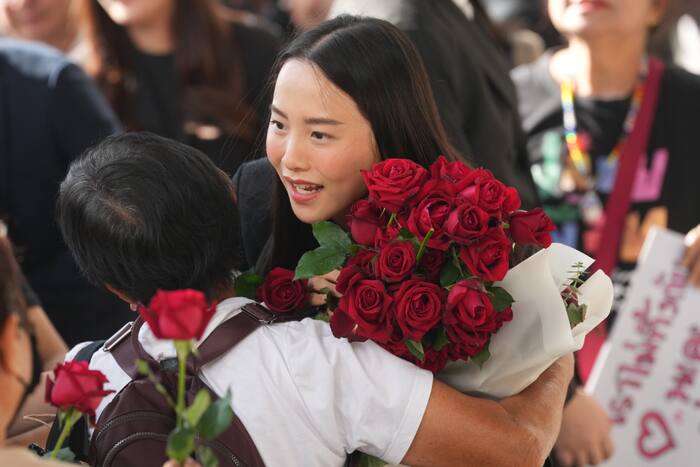
Several fellow party members accompanied Rukchanok to the hearing. Outside the Bangkok court, supporters welcomed her with red roses before she went inside.
People’s Party leader Natthaphong Reungpanyawut said the court had dropped the charge linked to one post because the evidence was insufficient. He added that the party would appeal to the Supreme Court and request bail for Rukchanok.
If bail is denied and she is taken into custody, Rukchanok would lose her parliamentary seat immediately.
The posts were published on X, formerly Twitter, in 2021. One reportedly criticized the monarchy over its connection to a coronavirus vaccine, while the other reshared an anti-monarchy statement. Rukchanok has denied authoring the posts.
Although the ruling was widely anticipated, it highlights the continued influence of Thailand’s conservative political establishment and its sensitivity to criticism viewed as threatening the monarchy. The progressive People’s Party is now Parliament’s main opposition force after placing second to the conservative Bhumjaithai Party in this year’s election.
The lese majeste provision, formally known as Article 112 of Thailand’s Criminal Code, remains deeply controversial. Critics point to cases in which people have faced prosecution for conduct as minor as liking a Facebook post. They also object to rules allowing anyone—not only members of the royal family or government officials—to file a complaint, a step that frequently results in detention during protracted legal proceedings.
Those convicted of defaming the monarchy can receive prison sentences of up to 15 years. Rights advocates say the law has repeatedly been used to suppress political opposition and public dissent.
Student-led pro-democracy protests that began in 2020 called for reforms to the lese majeste law. Many of the demonstrators, however, later became targets of the same legislation.
Thai Lawyers for Human Rights, a legal advocacy organization, reports that more than 290 people—many of them student activists—have faced charges under Article 112 since the start of 2020.