Robotic pets are helping older adults find companionship
Technology can keep us connected to people all around the world, but a D.C.-area nursing home is using technology in a different way, providing comfort to residents when no one else is around.
Robotic pets are giving some older adults something surprisingly real: companionship.
Inside the Hebrew Home of Greater Washington (HHGW) in Rockville, Maryland, 79-year-old James Harrison has a new roommate, a robotic cat he named Isis after the Egyptian goddess of healing. And, he says, that’s exactly what she does.
“It’s comforting me, and that’s what I feel like I need sometimes,” Harrison said.
Harrison said he’s always loved animals, but at this point in his life, caring for a real cat wasn’t possible.
“This, I can handle,” he said with a chuckle. “I don’t have to feed it or groom it or clean up after it.”
His robotic pet companion is one of nearly 80 now living with residents there.
To understand why something artificial can provide real comfort, you have to understand what life can sometimes feel like for Harrison.
“I don’t have much company; I don’t have much visitors,” he said. “My relatives are far away and so this is a nice companion for me…. It really has made a difference for me.”
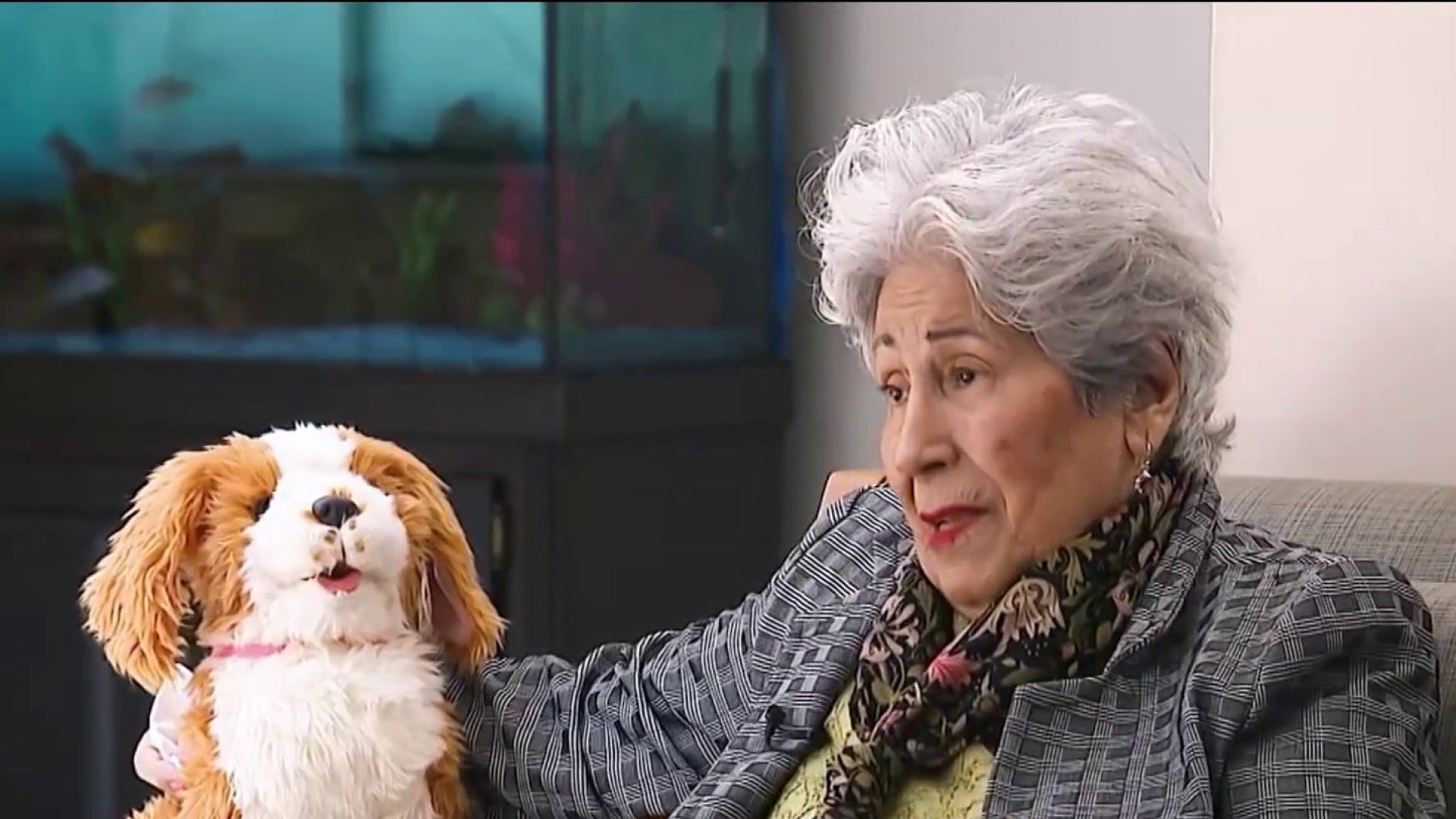
And he’s not alone. Nauzi Farzian, 88, has a pet companion of her own.
“They gave this sweet doggie to me, and I love him,” Farzian said. “He’s next to my bed. When I sleep every night, he comes to my bed.”
Farzian said it helps “a lot, mentally.”
Her robotic dog reminds her of the Pomeranian she once had. It’s a familiar feeling from a different time in her life, and that’s the idea behind this program.
For some older adults, aging can mean losing more than mobility or independence. It can mean losing everyday connections. Research has linked loneliness and social isolation to depression, cognitive decline, heart disease, stroke and even early death.
At this nursing home, they’re trying to fight that isolation with a little technology and a lot of nostalgia.
“As we get older, a lot of things — life changes in many ways,” HHGW’s recreational therapy director Annie Tran said. “For some people, you’re not able to do things you used to do. Or you’re away from family and friends and not able to connect with them… But with these robotic pets, they give a sense of comfort and unconditional love and just companionship.”
The program started a few months ago, with staff members trying to match the pets with residents who once had animals of their own, hoping a robotic cat or dog might awaken old memories and create a new connection.
For Harrison, Isis can’t replace the people he misses. But on the days when his room feels quiet, it gives him something to hold onto.
“When I really feel kind of down and lonely, I put it in my arms and turn around and face me, and I feel relaxed about it,” he said. “It feeds my soul… not my brain, but my soul. And that’s what I want to be fed.”
His pet may not have a heartbeat, but it does touch his heart.
Loneliness and isolation are growing problems, not just among aging adults. That’s why programs like this can be beneficial, with more and more families open to non-traditional treatments.