Reservoir Dogs Help Protect New York City’s Water Supply From Invasive Species
New York City’s drinking water has some unlikely new protectors: a team of highly trained conservation dogs.
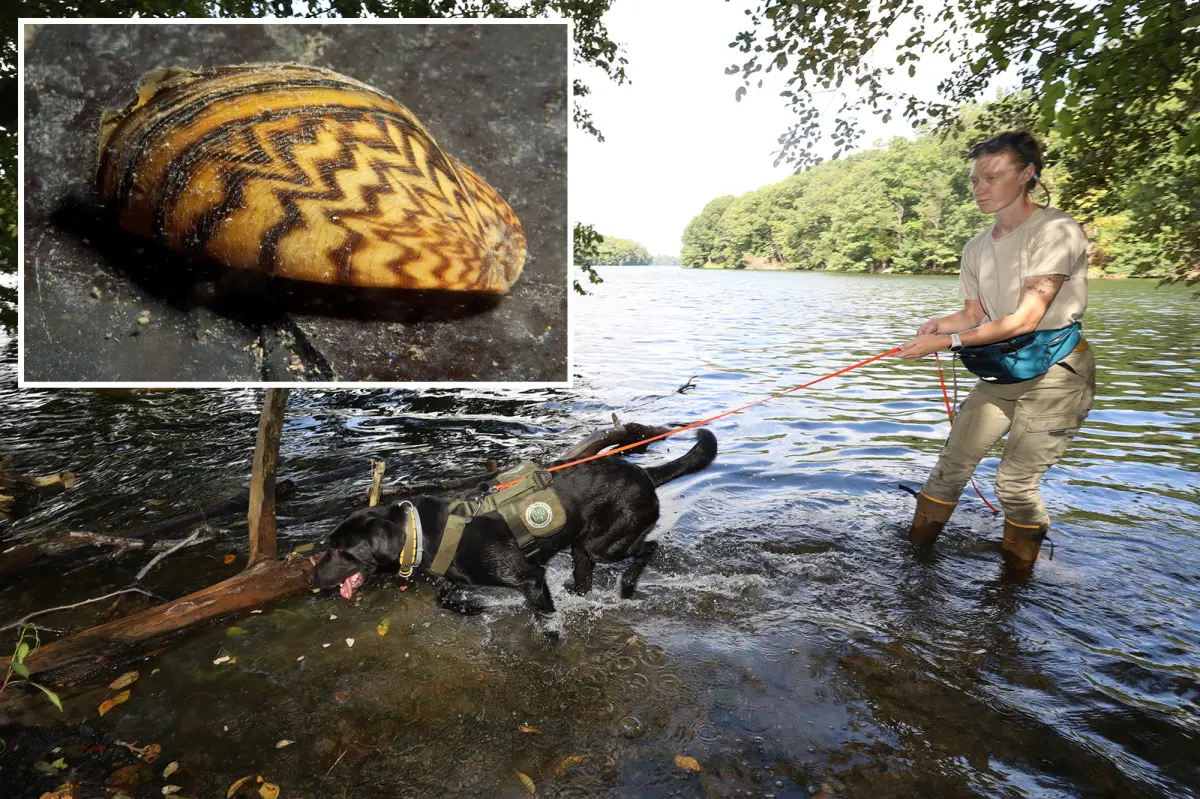
The dogs are working at two Westchester County reservoirs, Titicus and Cross River, where they sniff out invasive zebra mussels that threaten the city’s water supply.
“Conservation dogs are a new tool in DEP’s toolbox for safeguarding New York City’s drinking water, underscoring the agency’s commitment to maintaining the nation’s largest unfiltered supply,” a spokesperson for the city’s Department of Environmental Protection told The Post.
The dogs are trained to detect 14 invasive species and live full time with their handlers, who receive stipends from the New York-New Jersey Trail Conference.
The state Department of Environmental Conservation says a dog’s sense of smell can be 100,000 times more sensitive than a human’s. That ability allows the animals to search for species that can be “nearly impossible to locate with traditional survey methods.”
Zebra mussels can clog pipes, change water chemistry and reproduce rapidly on underwater infrastructure. Once established, they can also be difficult to detect, according to the National Park Service.
Peat, a Labrador who lives in Newburgh with program leader Arden Blumenthal, has been trained specifically to find zebra mussels. He was selected to patrol reservoir boat launches, storage areas and shorelines.
“He is just a typical boy. He’s sweet and goofy when it’s not work time,” Blumenthal said. “He loves a belly rub, but he’s also a seriously persistent workaholic.”
SEE ALSO: Hamas-Supporting Asylum Seeker Urges Britain to Deport Him
The canine initiative got underway last March, when the DEC awarded the New York-New Jersey Trail Conference a $400,000 contract for “dog services” focused on detecting, mapping and managing invasive species.
By late September, the New York City Department of Environmental Protection had joined the state in searching New York’s reservoirs for zebra mussels.
What accounts for the program’s $400,000 price tag?
Blumenthal said time is the biggest expense. The work is physically demanding, and the dogs require carefully tailored training plans to handle challenging terrain.
“It takes time to maintain their training and give them the level of performance that we want them to have,” said Blumenthal, who rewards Peat’s efforts with extra playtime.
“His paycheck is to get to play with me,” she said.
So far, three leading candidates — Peat, another Labrador and an Australian cattle dog — have been trained as part of the state’s Dogs for Invasive Species Control program. They have surveyed parks and waterways across New York for invasive species.
The Trail Conference plans to add a fourth dog to the team.