Justice Department accuses ‘Broadview 6’ judge of acting as a ‘prosecutor,’ wants mediator to step in
The Justice Department on Thursday accused the judge presiding over the wreckage of the “Broadview Six” case of acting as “investigator and prosecutor,” arguing that a “disinterested” third party should consider whether to block testimony from federal prosecutors in Chicago.
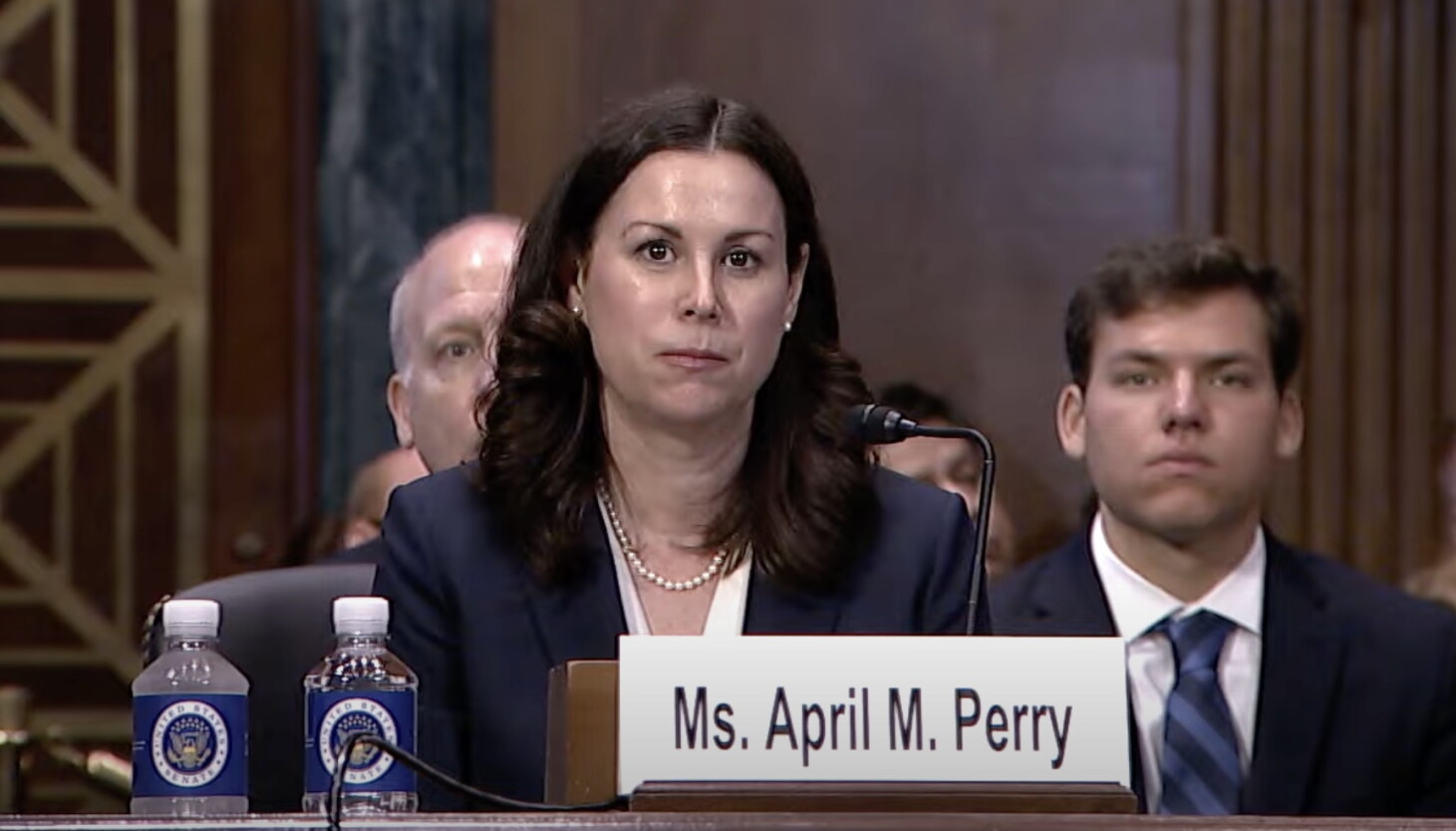
Associate Attorney General Stanley Woodward made the argument in another court filing that landed on the eve of a deadline set by U.S. District Judge April Perry. She’s ordered U.S. Attorney Andrew Boutros and three prosecutors who worked the “Broadview Six” case to testify Dec. 2.
But the Justice Department complained that legal privileges should block portions of that testimony. So Perry gave the three prosecutors who worked the case until Friday to submit a written version of any potentially privileged testimony for her review.
Now, Woodward has said a “special master” or some other “disinterested judicial officer” should rule on the Justice Department’s privilege claims.
“This court, having assumed the roles of investigator and prosecutor in addition to its native function as decisionmaker, cannot be the one to rule on the government’s privilege assertions,” Woodward argued in his four-page filing Thursday.
“Because this court is acting as judge and investigator,” he added, “it would be exceedingly difficult, if not impossible, for the court itself to decide questions of privilege while also preserving the perception of fairness.”
Woodward is the third-highest ranking official in the Justice Department, and he’s earned a reputation for tangling with federal judges. He made national headlines by facing off with U.S. District Judge Ana Reyes in Washington last month, over a golf course President Donald Trump has sought to renovate in the nation’s capital.
Woodward made an uneventful appearance in Perry’s courtroom Monday.
But Perry has already accused Woodward of delay tactics. She’s also denied similar requests in recent weeks as the potentially explosive Dec. 2 hearing draws nearer. In turn, Woodward has floated the idea of turning to the 7th U.S. Circuit Court of Appeals.
The “Broadview Six” case began as a conspiracy prosecution against six Operation Midway Blitz protesters. It collapsed in spectacular fashion in May amid allegations of prosecutor misconduct.
While the controversy initially turned on claims made against one veteran rank-and-file prosecutor, Perry has recently raised concerns about the veracity of statements Boutros and others made to her while the case played out.
The day the “Broadview Six” case fell apart, for example, Boutros told Perry he only learned of certain misconduct by his team in late April. Later, he acknowledged he’d received a transcript by email on Oct. 14, 2025, documenting the misconduct at issue.
Boutros said he didn’t remember reading it.
Separately, his team told Perry in March there were “no communications of any nature from, to, or with anyone outside [the U.S. attorney’s office] (other than the local FBI investigators assigned to the case) regarding any investigatory or charging decisions.
“To be crystal clear, this specifically includes anyone in the White House” or at Justice Department headquarters in Washington, prosecutors wrote.
Perry originally took the feds at their word that the communications don’t exist, but Boutros’ team has since suggested otherwise.