Judge Rejects Federal Bid to Segregate California Ballots
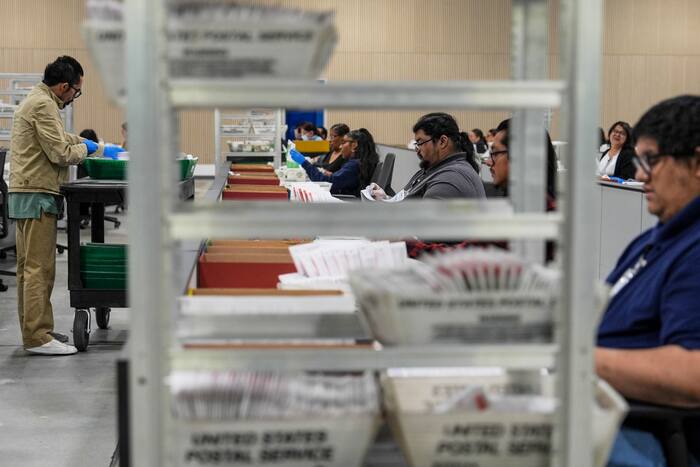
LOS ANGELES – A federal judge on Wednesday refused to halt California’s processing of ballots cast by as many as 20,000 people whom the Trump administration claims may not be U.S. citizens. The judge warned that granting the request could “wreak havoc” on the state’s midterm elections.
U.S. District Judge David O. Carter issued the ruling as more than 3.7 million Californians had already voted and over 500,000 ballots had been counted.
The decision represents another legal defeat for President Donald Trump’s effort to increase federal involvement in state-administered elections ahead of contests that will determine control of Congress for the remainder of his term.
The Republican administration filed suit against California election officials in mid-October, alleging they had failed to meet a 48-hour deadline to examine a list of roughly 20,000 registered voters whom the government said were likely noncitizens.
Carter wrote that the government’s proposal “would wreak havoc and disrupt the election that is already underway, create a chilling effect on election workers and voters alike, and discount the votes of United States citizens.”
The Justice Department had asked the court to order California to delay counting the affected ballots until the voters’ immigration status could be confirmed. It also sought an expedited ruling from an appeals court before Carter’s scheduled Oct. 27 hearing, but the higher court rejected that request.
The Justice Department made a comparable request in Washington state this week, asking officials to set aside ballots cast by hundreds of people suspected of not being U.S. citizens. In Alaska, a separate lawsuit filed last week seeks to postpone certification of the election if the Republican incumbent seeking a U.S. Senate seat loses. Each state has competitive congressional races that could influence the balance of power in Washington.
Carter strongly rejected the federal government’s demand, saying that separating ballots at this stage would force counties to create new procedures for sorting votes and could “risk disenfranchising an untold number of voters.” He said the proposal would effectively function as a voter purge and violate the National Voter Registration Act’s restriction on changes to voter rolls within 90 days of an election.
“Eroded trust in our democracy is irreparable. Once a vote is segregated, lasting harm has occurred,” Carter wrote. “If the Executive can discount votes and threaten an ongoing election due to unproven allegations, then our democracy is in danger. This Court declines to be a party to such process.”
The judge also dismissed the Justice Department’s claim that California was obstructing federal election-law enforcement. Carter noted that federal prosecutors had already shown they could pursue violations, including through the arrests of 28 noncitizens accused of voting or registering to vote unlawfully.
Federal prosecutors did not immediately respond to emailed requests for comment Wednesday evening.
Bill Essayli, the first assistant U.S. attorney who argued for the administration Tuesday, has said the request would not interfere with the election. He maintained that the Justice Department was instead seeking to “safeguard the elections.”
“Segregating a ballot does not prevent it from being counted later,” Essayli said. “It is designed to preserve the status quo and prevent the infection of our election with illegal ballots.”