Chicago Mayor Brandon Johnson faced questions over violence against women and children.
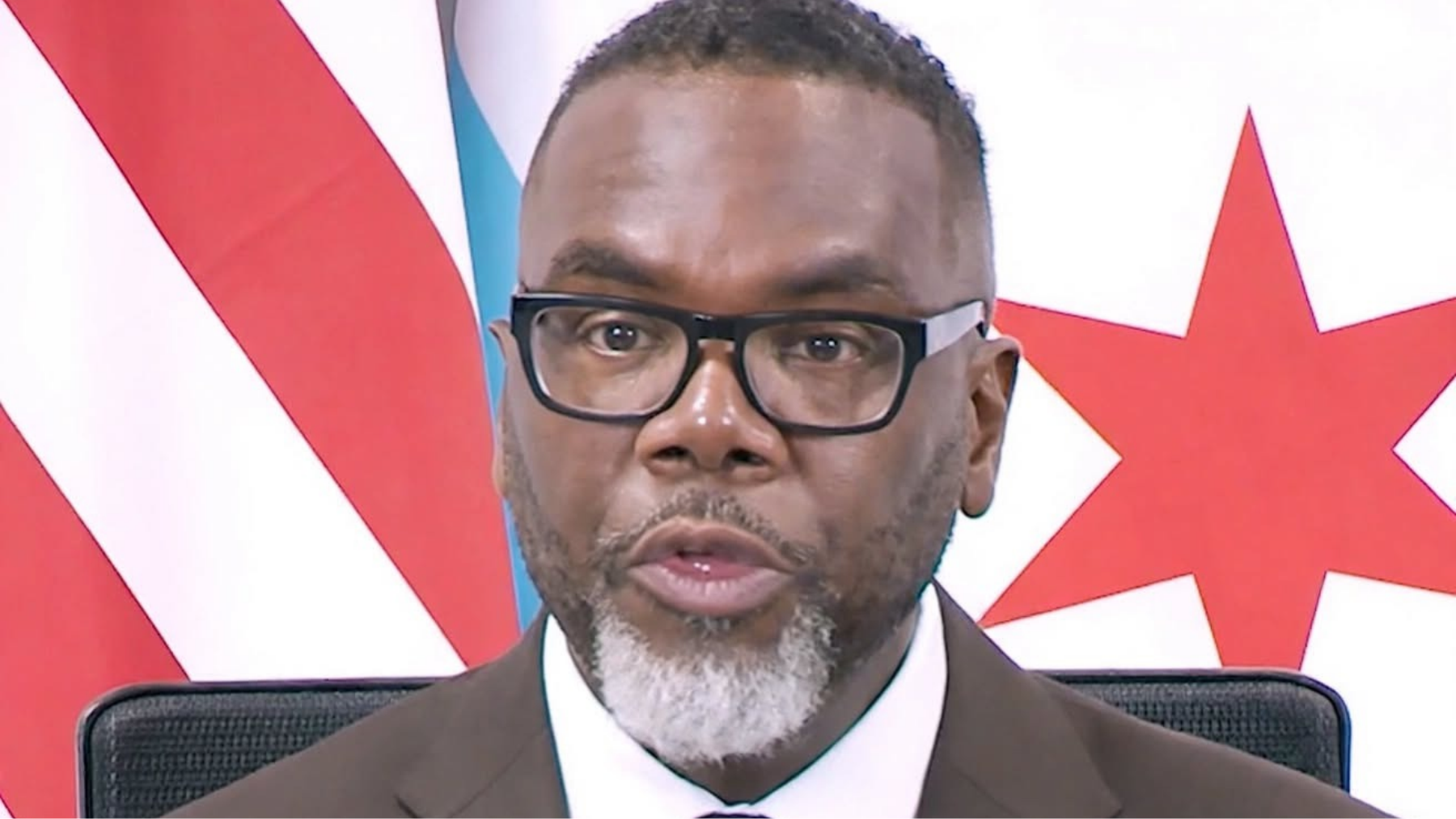
Chicago Mayor Brandon Johnson faced pointed questions during a recent press briefing about his administration’s response to violent crimes involving women and children, leading to a tense exchange with a reporter who challenged the mayor over how he publicly addresses victims.
The confrontation came as Chicago continues to debate public safety, mental-health services and the role of community investment in reducing violence. Johnson has repeatedly described violence reduction as a top priority while arguing that prevention requires both law enforcement and investment in neighborhoods.
The Brief
During the exchange, reporter William Kelly pressed Johnson about whether the mayor would publicly name victims of violent crimes. Kelly referenced several victims, including seven-year-old Eddimar Paola Hernandez, Bethany McGee and Sheridan Gorman.
Johnson pushed back, saying he had already spoken Eddimar’s name earlier that morning. When Kelly continued naming victims, Johnson called the interruption “disrespectful and dishonorable” and told the reporter to respect the office of the mayor.
The exchange followed the death of Eddimar Hernandez, a seven-year-old Chatham girl who was killed in an unprovoked attack while walking with her older sister. The Chicago Sun-Times reported that Johnson had acknowledged the child’s death and said his administration would invest in Chatham and other communities experiencing violence.
What We Know
Johnson has emphasized that his approach to violence includes both public safety measures and investments aimed at addressing conditions that can contribute to violence.
In recent remarks, the mayor has pointed to mental and behavioral health services, youth employment, affordable housing and fully resourced schools as components of his broader strategy. He has argued that communities need resources that can help prevent violence rather than relying only on services after a tragedy occurs.
Johnson has also highlighted law enforcement efforts. During a recent PBS interview, he said his administration had promoted more than 250 detectives and revamped the Chicago Police Department’s detective bureau. He said the changes were intended to improve communication within the department and strengthen its ability to solve violent crimes.
The mayor has simultaneously pointed to declining violence in Chicago. In a CNN interview on October 7, Johnson said the city was experiencing historically low levels of violence and argued that community violence intervention programs had contributed to reductions in violence in areas where they operate.
The Victims at the Center of the Debate
The confrontation referenced several high-profile cases that have generated public attention.
Bethany McGee, 26, was seriously injured in an attack aboard a Chicago Transit Authority Blue Line train in November 2025. Federal authorities later charged a man in connection with the attack.
Sheridan Gorman, an 18-year-old Loyola University Chicago student, was fatally shot in March 2026. Her death has also remained part of the broader public discussion about violence in Chicago.
More recently, Eddimar’s death renewed questions about how the city responds to violent attacks against children. Johnson said after speaking with her family that the city would work with the Chicago Police Department and support the family and the Chatham community.
What’s Next
The debate over Chicago’s approach to violent crime is likely to continue as Johnson prepares his 2027 budget and campaign for a second term.
The mayor has said his administration will continue pursuing both community investment and law enforcement accountability. His recent comments indicate that mental-health services, youth employment and neighborhood resources will remain central to his prevention strategy, while the administration also points to expanded detective staffing and police investigations as part of its public-safety response.
The latest confrontation illustrates the continuing disagreement over how Chicago should measure progress on public safety and how city leaders should respond publicly when residents are killed or seriously injured by violence.