‘A sincere blessing’: How 3 Latina breast cancer surgeons incorporate culture into care
Facing breast cancer can be terrifying, but for some Latina patients, something as simple as hearing their surgeons speak Spanish can change the experience.
Because it’s not just about understanding the words, it’s about feeling understood.
“It means treating a person throughout their journey in a place that they feel comfortable, that they feel safe, and that they feel that they can, you know, express themselves,” said Dr. Angelis Vázquez Pérez.
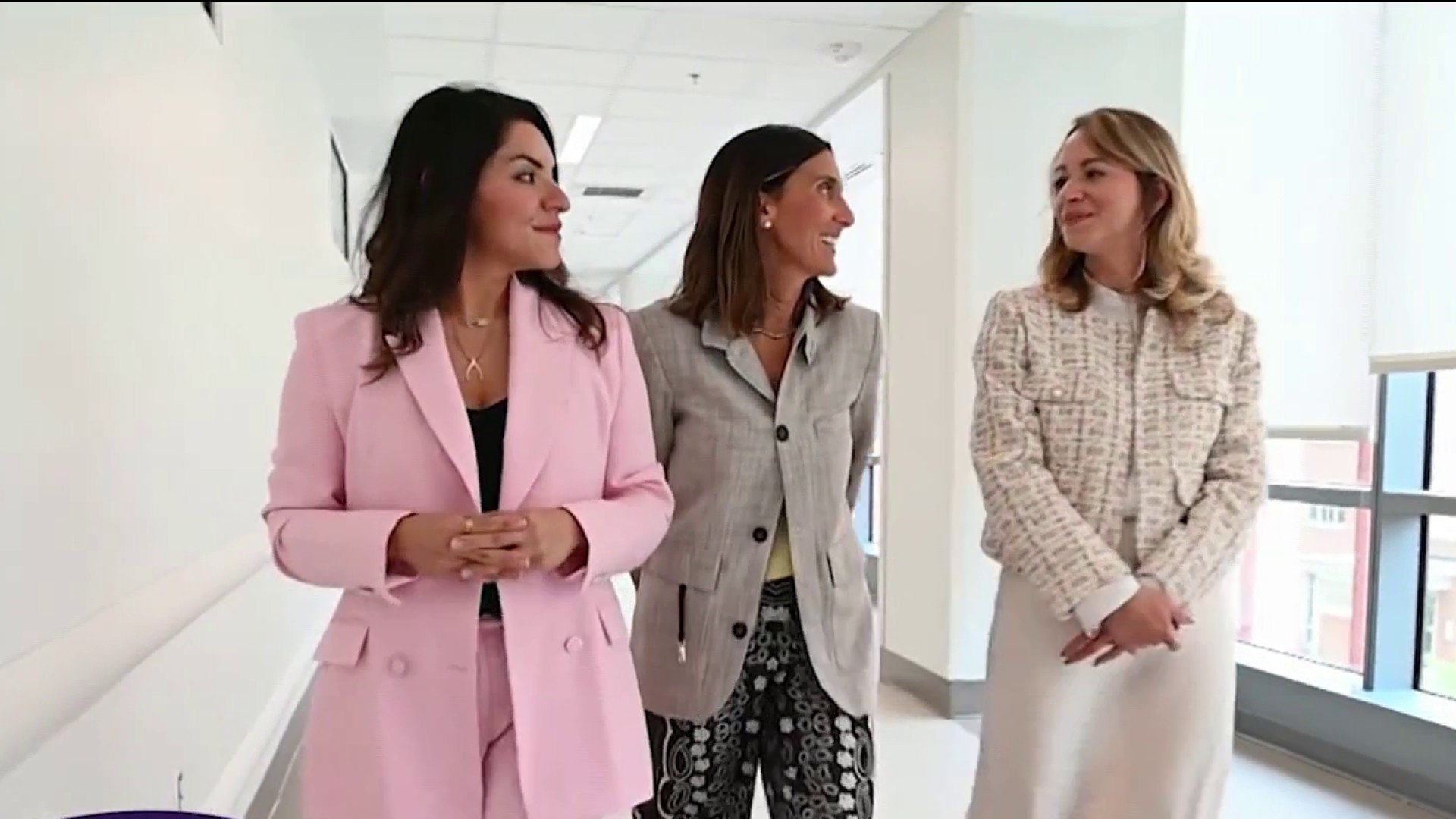
That bond has become part of what makes the team at MedStar Georgetown’s Cancer Institute unique. Vázquez Pérez, Dr. Jennifer Son and Dr. Lucy María De La Cruz are breast surgical oncologists. All three Latina, all three speak Spanish, and all three know what it means to enter a profession where women who look and sound like them have often been underrepresented.
“It feels amazing to be able to be with two other Latina surgeons because less than 2% of the surgeons in the United States are Latina surgeons,” Vázquez Pérez said.
Their paths here were very different. Son is the daughter of Guatemalan parents. Vázquez Pérez was born and raised in Puerto Rico. De La Cruz was born in Cuba, lived in Africa and Spain and arrived in the U.S. in fifth grade without speaking English.
“I grew up in a war zone in a communist country. I was a refugee, so I had a lot of brokenness around me,” De La Cruz said. “And so the way that I tried to fix it was by studying, by being responsible, by getting good grades, and then it was only natural that I would become a surgeon.”
She now is chief of the breast surgery program, and she said that somehow and organically, all three women found themselves on the same team — a coincidence that makes a real difference for a Hispanic woman diagnosed with breast cancer.
“Our hope is that they can come seek care with us,” Son said. “We can speak their language and be advocates for their health, raise breast cancer awareness and hopefully be able to help them in their journey for breast cancer care.”
Because speaking the same language is about building enough trust for a patient to ask questions she might otherwise keep to herself.
“They’re able to communicate with me what’s going on, how can I help them, how can we can talk about this not only with themselves, but also with their family members,” Vázquez Pérez said.
For Son, that connection feels even more special.
“I love treating, first of all, all women, but when a Hispanic woman comes or a Latina woman comes, I feel like it’s like treating my mother, my sister or someone very close to my heart,” she said.
The team has used their language and their culture as part of the healing for Hispanic patients.
“I usually tell patients, they tell, ‘Thank you so much,’ and I’m like, ‘No, please don’t thank me. I get more from you than you get from me,’” De La Cruz said.
And now they are also becoming something they didn’t always have growing up: an example for the next generation.
“I actually wrote a children’s book called ‘Tiny Scrubs, Big Dreams,’ and so my hope is that any Latina, any child, any little girl is inspired,” Son said.
The three doctors all share one mission: to make sure women know they don’t have to face cancer alone.
“I don’t take that very lightly,” De La Cruz said. “And I think it’s a sincere blessing that I can do it in their language.”