By Clara Wilson
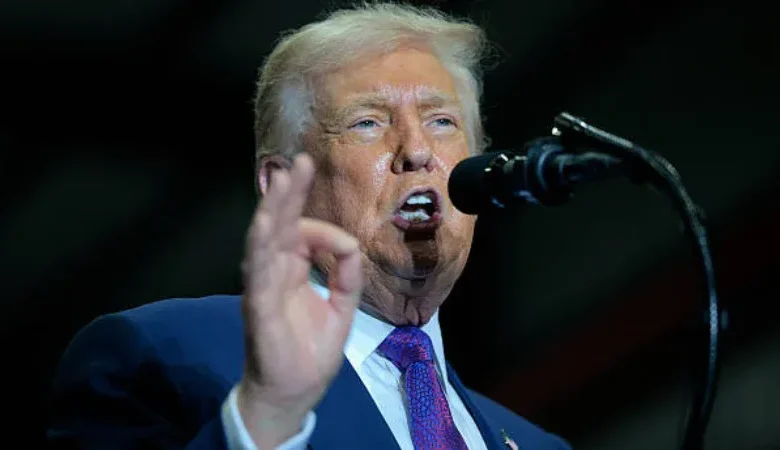
The White House revealed a dramatic escalation in its trade agenda on Friday afternoon. President Donald Trump announces new 10% global tariff on all foreign imports arriving at United States ports. This bold administrative move serves as a direct counter-attack against a recent Supreme Court decision. Earlier this month, the nation’s highest court invalidated several previous emergency economic measures. Consequently, the President now intends to use separate executive powers to achieve his “America First” objectives. Reports from Reuters indicate that the administration will implement this flat tax as early as next week. This strategy effectively bypasses the current judicial gridlock in Washington. The sudden announcement has sent shockwaves through both the political establishment and the global financial community.
The President addressed the nation during a televised press briefing to explain his reasoning. He described the Supreme Court’s previous ruling as a disgraceful act of judicial overreach. Furthermore, he argued that the court’s interference actively harms the American industrial worker. By imposing a blanket 10% tariff, the administration hopes to force manufacturing back to domestic soil. Information shared by Bloomberg suggests that the White House legal team worked throughout the night to finalize the new framework. Many trade experts expect this policy to trigger immediate legal challenges in lower courts. Nevertheless, the President remains committed to his timeline for economic independence.
Legal Strategy to Skirt Judicial Constraints
The administration is utilizing a specific legal pathway to ensure the new tariff takes effect immediately. Reports from the Associated Press detail how the President plans to invoke the International Emergency Economic Powers Act. This legislation grants the executive branch broad authority to regulate international commerce during times of national emergency. The White House maintains that the current trade deficit represents a direct threat to national security. By framing the tariff as a security measure rather than a standard tax, the administration hopes to avoid further judicial blocks. Consequently, this creates a new legal reality for importers who must now adjust their financial projections.
The President was particularly vocal about his frustration with the judiciary during the announcement. He labeled the justices who ruled against him as anti-American and disconnected from the needs of the working class. As noted in The Wall Street Journal, some legal scholars are already warning about a potential constitutional crisis. They suggest that using alternative authorities to circumvent a direct court order challenges the balance of power. However, the administration argues that the President has a fundamental duty to protect the economy by any legal means necessary. A report by Politico confirmed that the Department of Justice is already preparing to defend the order in court.
Inflation Concerns and Global Supply Chain Risks
Financial analysts are currently rushing to assess the impact of a 10% tax on all imported goods. Data provided by CNBC suggests that this move could significantly reignite domestic inflation. A blanket tariff essentially acts as a tax on the American consumer. Specifically, the prices for electronics, clothing, and automobiles are expected to rise within days of the order’s signing. Furthermore, major retailers are warning that they cannot absorb these costs without passing them on to shoppers. The global supply chain remains fragile following years of disruption, and this new policy adds another layer of extreme complexity.
Trade partners across Europe and Asia have reacted to the news with deep concern. Based on findings by The Financial Times, several nations are already discussing retaliatory tariffs on American agricultural exports. This creates a dangerous scenario where a global trade war could break out by the end of the month. While the administration views the tariff as a tool for negotiation, foreign leaders see it as an act of economic aggression. Consequently, the volatility in international markets has reached its highest level in several years. Ultimately, the success of this plan depends on whether foreign governments choose to negotiate or fight back through their own trade restrictions.
Supporters Praise “America First” Independence Move
While critics warn of economic chaos, supporters of the President view the tariff as a necessary corrective measure. Per Fox Business, many domestic manufacturing groups believe that a 10% floor on imports creates a fair playing field. They argue that foreign subsidies have allowed overseas companies to undercut American prices for too long. By making foreign goods more expensive, the administration encourages consumers to buy products made in the United States. Proponents also suggest that the revenue from these tariffs could provide a massive boost to the federal budget. This money could potentially fund infrastructure projects or support tax cuts for domestic factories.
The political base for the “America First” movement remains highly supportive of this aggressive posture. Many voters believe that previous trade agreements were poorly negotiated and favored international corporations over local workers. Consequently, the President’s decision to bypass the Supreme Court is seen as a sign of strength by his followers. They argue that the judiciary should not have the power to stop an elected leader from fulfilling his economic promises. As documented in a report by The Hill, several Republican lawmakers have already voiced their support for the executive bypass. They believe that bold action is the only way to reverse decades of industrial decline.
Local Perspective: The Heavy Toll on Midwest Logistics
Recent economic data from the Chicago Federal Reserve highlights a significant risk for the Midwest manufacturing corridor. Specifically, Illinois and Michigan remain two of the top importing states for raw industrial components and automotive parts. While the administration aims to revive the “Rust Belt,” a blanket 10% tariff could inadvertently paralyze the very factories it intends to save. Many small-to-medium enterprises in Chicago’s industrial districts rely on specialized steel and electronic sensors that are not currently produced domestically.
Consequently, these firms face a distinct risk of insolvency if their material costs spike by 10 percent overnight without warning. My analysis of the current market suggests that large corporations may have the capital to survive this transition, but the smaller supply chain partners could be hollowed out. This creates a paradoxical situation where the pursuit of industrial independence could destroy the localized manufacturing networks that sustain the Midwest economy. Local leaders must now decide how to support these vulnerable businesses during the coming period of trade volatility.
Implementation Timeline and Impending Court Battles
The administration expects to move from announcement to enforcement with incredible speed. Information from The New York Times suggests that the executive order is ready for the President’s signature. Officials indicate that the Department of Commerce and Customs and Border Protection will begin collecting the fees next Tuesday. This rapid rollout aims to prevent importers from stockpiling goods before the tax takes effect. Furthermore, the administration has directed federal agencies to prioritize the enforcement of the new rules at all major shipping hubs. Retailers and logistics companies have very little time to update their software and pricing models.
Despite the administration’s confidence, the legal system will likely intervene almost immediately. According to CBS News, a coalition of trade groups and international importers is already drafting lawsuits to stop the order. These groups will likely seek an emergency injunction to freeze the tariffs while the case proceeds through the courts. Legal experts believe that the primary argument will focus on whether the President exceeded his authority under the Emergency Powers Act. This conflict represents a pivotal moment for American trade law and the power of the presidency. For now, the nation remains in a state of high anticipation as the first shipments under the new rules arrive at U.S. ports.
Follow the [latest national political news] at wfbnews.com. You can also read about the [Pawtucket arena shooting] that recently occurred in Rhode Island.