By Clara Wilson
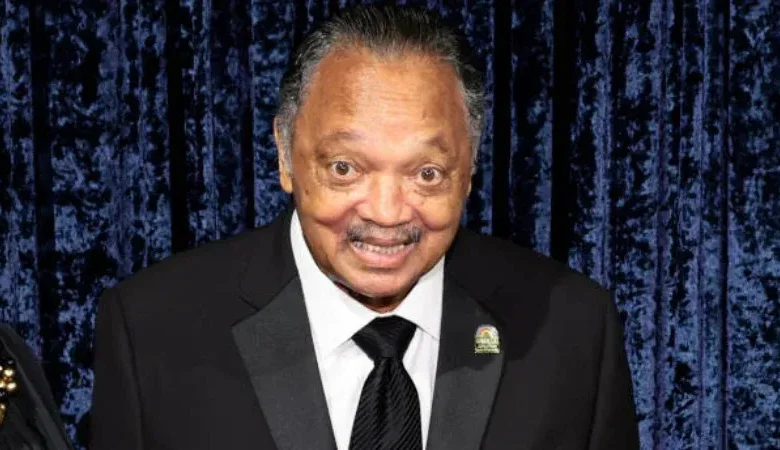
The United States has lost one of its most influential voices for social justice and political equality. Rev. Jesse Jackson dies at the age of 84, leaving behind a legacy that transformed the American landscape. The news broke on Tuesday, February 17, 2026, as tributes began pouring in from around the world. A native of Greenville, South Carolina, Jackson spent more than six decades fighting for the marginalized. He rose from humble beginnings to become a global statesman and a two-time presidential candidate. His organization, the Rainbow PUSH Coalition, served as a powerful vehicle for racial and economic progress. Consequently, his passing marks the end of an era for the American civil rights movement.
Jackson had recently stepped back from public life to manage his health. He battled Parkinson’s disease for several years before his formal retirement in 2023. Despite his physical challenges, he remained an active mentor to the next generation of leaders. His family confirmed that he passed away peacefully, surrounded by loved ones. Throughout his life, Jackson lived by the motto “Keep Hope Alive,” a phrase that motivated millions. His influence extended from the streets of the Jim Crow South to the highest halls of international power. The nation now begins a period of mourning for a man who dedicated every waking hour to the cause of freedom.
A Life Rooted in the Struggle for Civil Rights
The journey of Jesse Jackson began in the segregated South. Born in Greenville, South Carolina, he experienced the harsh realities of racial division from an early age. He eventually attended North Carolina A&T State University, where he became involved in student activism. His sharp intellect and commanding presence soon caught the attention of Dr. Martin Luther King Jr. Jackson became a trusted young aide to the civil rights giant during the mid-1960s. He participated in the historic Selma to Montgomery marches, witnessing firsthand the brutality of systemic racism. Furthermore, he served as the director of Operation Breadbasket in Chicago.
Operation Breadbasket focused on using economic leverage to create jobs and opportunities for Black citizens. Jackson successfully negotiated with major corporations to ensure they hired minority workers and utilized minority-owned businesses. This early success proved that economic empowerment was a vital component of civil rights. Following the tragic assassination of Dr. King in 1968, Jackson continued the work of the Southern Christian Leadership Conference. However, he eventually branched out to form Operation PUSH in 1971. This organization would later merge with the National Rainbow Coalition to become a cornerstone of American activism.
Breaking Barriers in the Arena of National Politics
Rev. Jesse Jackson changed the face of American politics during the 1980s. He launched two historic campaigns for the presidency in 1984 and 1988. At the time, many viewed a Black candidate for the highest office as an impossible dream. Jackson defied these expectations by building a “Rainbow Coalition” of voters. This coalition sought to unite people across racial, religious, and economic lines. Specifically, he reached out to farmers, workers, and marginalized communities who felt ignored by the mainstream parties. His campaigns broke significant barriers and registered millions of new voters across the United States.
In 1988, Jackson won several key primaries and finished second in the delegate count. His success paved the way for future generations of diverse political candidates. He proved that a progressive message of inclusion could resonate on a national scale. Furthermore, his powerful oratory skills became a hallmark of the Democratic National Conventions. His 1984 speech, where he urged the nation to “be sensible” and “be hopeful,” remains one of the most famous in political history. Although he never reached the White House, his impact on the electoral process was profound and permanent.
Global Statesman and the Legacy of Hostage Diplomacy
Beyond domestic politics, Jackson earned a reputation as a daring global diplomat. He frequently engaged in what many called “hostage diplomacy” during international crises. In 1983, he traveled to Syria to negotiate the release of Navy Lt. Robert Goodman, whose plane had been shot down. Against the odds, Jackson secured Goodman’s freedom and brought him home to American soil. This success was followed by similar missions to Iraq and Cuba. In each instance, he used his moral authority and communication skills to navigate complex geopolitical stalemates.
Jackson believed that dialogue was the most effective tool for peace. He often met with foreign leaders whom the official U.S. government refused to recognize. While some critics questioned his methods, his results were undeniably positive. He saved lives and provided a template for non-governmental intervention in international affairs. His work in South Africa was particularly notable, as he was a staunch opponent of apartheid. He maintained a close relationship with Nelson Mandela and celebrated the eventual fall of the discriminatory regime. This international perspective ensured that his legacy was truly global in scope.
Local Perspective: The Passing of a Civil Rights Torchbearer
Based on current sociological trends in 2026, the death of Rev. Jesse Jackson represents a critical transition for American activism. Specifically, Jackson was the last major link between the 1960s civil rights era and the modern social justice movements. In his hometown of Greenville, South Carolina, local leaders are already discussing a permanent memorial to honor his contributions to the state’s progress. His ability to modernize the fight for equality through economic initiatives like the “Wall Street Project” ensured that his influence remained relevant in the 21st century.
Consequently, the passing of Jackson forces a new generation of activists to carry the mantle of leadership without his direct guidance. His retirement in 2023 had already signaled this shift, but his physical presence remained a source of comfort for many. In 2026, as the nation faces new challenges regarding voting rights and economic disparity, Jackson’s strategies remain a blueprint for success. The “Rainbow Coalition” concept is now a standard practice in grassroots organizing. We are seeing a resurgence of his coalition-building techniques in current urban policy debates across the South.
Tributes Honor the Motto to Keep Hope Alive
As news of his passing spread, world leaders and activists released statements of admiration. President Trump and other prominent figures acknowledged Jackson’s lifelong commitment to the American people. Flags across South Carolina and in Chicago will likely fly at half-staff in his honor. The Rainbow PUSH Coalition announced that it will continue its mission under its new leadership, fueled by Jackson’s vision. His motto, “Keep Hope Alive,” continues to echo in the hearts of those he inspired over his sixty-year career.
Funeral arrangements are currently being finalized in Chicago and Greenville. Thousands are expected to attend the services to pay their final respects to the fallen leader. While Rev. Jesse Jackson dies, his contributions to the world remain immortal. He showed the nation how to dream bigger and work harder for a more perfect union. His voice may be silent, but the movement he helped build will continue for decades to come. The history books will remember him as a man who never stopped fighting for the soul of America.
Stay updated with the [latest national political news] at wfbnews.com. You can also read about the recent [Dobie High School lockdown] in Houston.