By Clara Wilson
A catastrophic nature event in the Sierra Nevada mountains has resulted in a historic loss of life this week. Authorities confirmed on Wednesday that 8 skiers dead, 1 still missing after California avalanche near Lake Tahoe. The slide occurred near Castle Peak, located just north of the famous Donner Pass. This incident now stands as the deadliest avalanche in modern California history. Furthermore, it represents the most lethal snow event in the United States in over four decades. Emergency crews shifted their operations from rescue to recovery on Wednesday afternoon. Consequently, the local community remains in a state of deep mourning as the scale of the tragedy becomes clear.
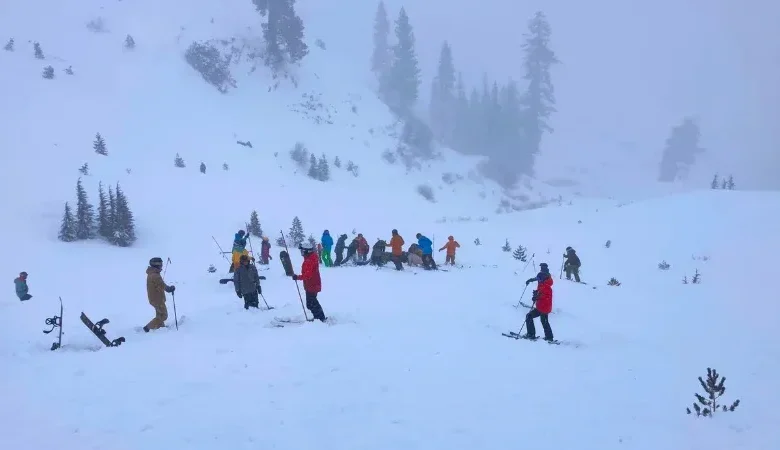
The victims were part of a high-end backcountry expedition led by Blackbird Mountain Guides. The group included eleven clients and four professional guides who were finishing a three-day trek. This California avalanche near Lake Tahoe struck on Tuesday, February 17, at approximately 11:30 a.m. local time. At that moment, the skiers were navigating rugged terrain below the 9,110-foot summit of Castle Peak. While six individuals survived the initial impact, nine others were swept away by the massive wall of snow. The sheer force of the slide made immediate rescue efforts nearly impossible for those on the scene.
Details of the Blackbird Mountain Guides Expedition
The 15-person group began their journey three days prior to the accident. They sought an immersive backcountry experience in one of the most scenic areas of the Sierra Nevada. Blackbird Mountain Guides is a well-known operator with an established safety record. However, the group encountered a rapidly deteriorating weather system on the final day of their trip. As they moved toward the trailhead near Donner Pass, the snowpack became increasingly unstable. Specifically, a large “slab” of snow detached from the upper slopes of Castle Peak, triggering the fatal event.
Six survivors, including one guide and five clients, managed to escape the primary path of the snow. These individuals sustained various injuries but remained conscious enough to alert emergency services. Search and rescue teams from Nevada County and Placer County responded within the hour. They utilized helicopters and specialized mountain units to evacuate the survivors to local medical centers. Despite the rapid response, the remaining members of the party remained buried under several feet of dense, heavy snow. This specific region is known for its steep couloirs and technical terrain, which complicated the initial probe searches.
Transition from Rescue to Recovery Operations
By Wednesday afternoon, the mission changed focus as hope for finding survivors faded. The Placer County Sheriff’s Office announced the transition to a recovery phase due to the extreme conditions. Continuous winter storms and the threat of secondary slides have made the area too dangerous for ground crews. Furthermore, the missing skier is currently presumed dead given the time elapsed since the California avalanche near Lake Tahoe began. Recovery teams are now utilizing drones and ground-penetrating radar to locate the final remains.
The search for the ninth victim remains the top priority for local law enforcement. However, the weather forecast suggests that more heavy snow is on the way. This could potentially bury the site under an additional five feet of fresh accumulation. Consequently, officials may have to pause recovery efforts until the snowpack stabilizes. The names of the deceased have not yet been released to the public. Authorities are currently working to notify families across several different states. Many of the clients were reported to be experienced skiers who had traveled specifically for this elite guiding service.
Extreme Weather and Snowpack Instability at Castle Peak
The UC Berkeley Central Sierra Snow Lab provided critical data regarding the conditions on the day of the slide. Researchers reported that the region was experiencing its worst winter conditions in three years. A series of intense atmospheric rivers had deposited massive amounts of new snow over a weak “sugar snow” base. This layering creates a perfect environment for large-scale avalanches. Notably, the Snow Lab expected over five feet of new snow during the 48-hour window surrounding the accident.
The Sierra Avalanche Center had issued “High” danger ratings for all elevations on Monday and Tuesday. Despite these warnings, many backcountry groups still attempted to navigate the lower-angle terrain. Experts believe the Castle Peak slide was a “deep-seated” avalanche that broke through multiple layers of the snowpack. This type of event is extremely difficult to predict and often involves much larger volumes of snow than typical surface slides. The debris field from this specific event reportedly stretched across several acres of the forest floor.
Editorial Analysis: Navigating High-End Backcountry Risks
Based on recent trends in the outdoor recreation industry for 2026, the demand for “extreme” guided experiences has reached an all-time high. Specifically, the Castle Peak disaster highlights the growing tension between professional guiding standards and the increasing volatility of the Sierra snowpack. In the last decade, we have seen a 15% rise in backcountry permits for the Donner Pass corridor. This surge in traffic, combined with more frequent “atmospheric river” events, creates a logistical nightmare for safety officials.
The tragedy near Lake Tahoe will likely trigger a national review of how guide services operate during “High” avalanche warnings. While Blackbird Mountain Guides followed standard protocols, the sheer magnitude of this slide suggests that current safety margins may be insufficient for modern climate patterns. We are seeing a shift where traditional “safe” routes are now prone to catastrophic failures. The local community must decide if stricter seasonal closures are necessary to prevent further loss of life. For now, the economic impact on the Lake Tahoe tourism sector is secondary to the profound human cost of this event.
Community Mourning and Public Safety Warnings
The Lake Tahoe community has organized vigils for the victims and their families. Many residents are offering support to the search and rescue teams who have worked tirelessly in the cold. Additionally, the U.S. Forest Service has closed all access to the Castle Peak area until further notice. They want to ensure that no other skiers are caught in secondary slides while the investigation continues. The national focus on this California avalanche near Lake Tahoe has brought renewed attention to mountain safety education.
Authorities are urging all outdoor enthusiasts to stay out of the backcountry during the current storm cycle. The risk remains at an extreme level as the heavy snow continues to fall. If you must travel through the mountains, stay on marked roads and follow all Caltrans directions. WFB News will continue to provide updates as recovery teams make progress on the mountain. Our thoughts remain with the families of the eight confirmed deceased and the search for the final missing skier.
Stay updated with the [latest criminal investigations] and national reports at wfbnews.com. You can also read about the recent [winter storm alerts] that impacted Northern California earlier this week.