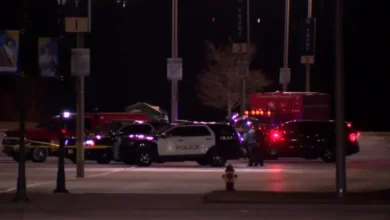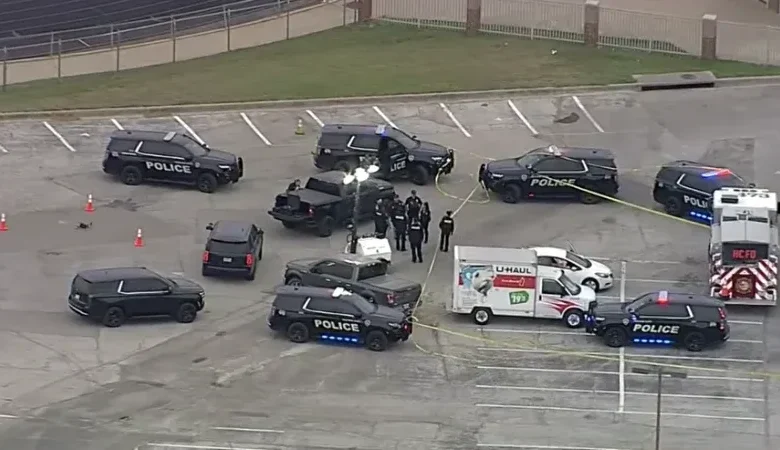
Three people are confirmed dead following a violent shooting in a Haltom City parking lot. This deadly incident occurred on the afternoon of Friday, March 27, 2026. Gunfire erupted around 4:30 p.m. right outside the Birdville Independent School District stadium and administrative offices.
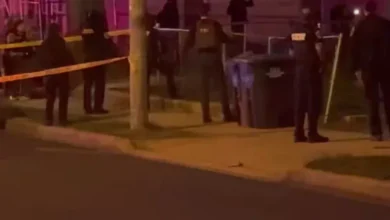
The active crime scene sits strictly along the 6200 block of Broadway Avenue. Haltom City police and fire departments responded immediately to investigate the chaotic aftermath. Authorities confirmed the fatalities include two female victims and one male suspect. One woman died directly at the scene from severe trauma.
Paramedics rapidly transported the second woman to a local hospital where she later died.
Officers also found the armed male suspect dead in the same parking lot. Police definitively stated this was an isolated incident without any ongoing community threat. Consequently, law enforcement officials are not actively searching for any additional fleeing suspects. The entire area remains safely secured under heavy police presence into the evening. Birdville ISD released a public statement confirming the shooting happened strictly after school hours.
Furthermore, no scheduled activities were occurring at the stadium or nearby facilities. The ongoing investigation involves local detectives and the Tarrant County Sheriff’s Office. Investigators are working diligently to determine the relationship between the individuals and the motive. Finally, authorities have not yet released the exact identities pending official family notifications.
First Responders Secure the Broadway Avenue Crime Scene
Emergency dispatchers received multiple frantic calls regarding sudden gunfire on Friday afternoon. Haltom City police officers quickly flooded the 6200 block of Broadway Avenue. Responding patrol units immediately secured the massive parking lot to protect nearby civilian bystanders. Fire department paramedics arrived simultaneously to provide rapid trauma care. They quickly located three severely wounded individuals scattered across the asphalt. Medical personnel determined that one female victim had already succumbed to her catastrophic injuries. Therefore, they swiftly shifted their primary focus toward the second female victim. Ambulances rushed this critically injured woman to a nearby regional trauma center. Unfortunately, highly trained doctors could not reverse the severe physical damage. She died shortly after arriving at the busy emergency room. Meanwhile, officers discovered the male suspect unresponsive near a weapon in the same parking lot. First responders officially pronounced him dead directly at the sprawling crime scene. Supervisors subsequently established a highly secure perimeter using yellow police tape. They effectively locked down the entire stadium complex to preserve vital forensic evidence.
Law Enforcement Agencies Launch a Complex Investigation
The sheer scale of this violent event required massive regional police coordination. Haltom City detectives immediately requested crucial operational assistance from neighboring municipal jurisdictions.
Consequently, heavily armed agencies from nearby Fort Worth arrived to provide essential logistical support. Furthermore, the Tarrant County Sheriff’s Office deployed specialized forensic teams to the active scene. Crime scene technicians meticulously photographed every single scattered shell casing across the vast parking lot. They actively utilized advanced laser scanning technology to reconstruct the exact bullet trajectories. Currently, veteran investigators work tirelessly to establish a highly definitive weekend timeline. Their primary objective involves determining the specific personal relationship between the three deceased individuals.
Detectives strongly believe this tragic event stemmed directly from a targeted private dispute. However, they must definitively uncover the exact psychological motive driving this fatal daytime violence. The local medical examiner currently holds the official identities of all three individuals. Authorities will strictly withhold these names until they successfully notify all immediate family members.
Birdville ISD Addresses the Community After the Tragedy
The sudden explosion of severe violence directly on school district property terrified local parents. Therefore, the Birdville Independent School District quickly released a formal public statement Friday evening. District officials explicitly confirmed that the fatal shooting took place strictly after normal school hours. Furthermore, absolutely no extracurricular student activities were scheduled at the sprawling stadium complex. The nearby administrative offices were also completely clear of standard daily student traffic. Police explicitly noted that absolutely no gathered evidence connects this violence to the actual school district. The involved individuals simply utilized the massive open parking lot as their physical meeting point. Nevertheless, school administrators immediately initiated their strict emergency communication protocols. They sent automated voice messages to reassure highly anxious local neighborhood families. District leaders continuously collaborate with local police to ensure maximum campus safety moving forward. The Birdville Independent School District strictly prioritizes the absolute security of every single enrolled student. Consequently, campus security teams will likely increase their visible patrols around the administrative buildings next week.
Analyzing Haltom City Demographics and Regional Safety
Understanding the broader community impact requires closely analyzing recent local demographic data trends. Haltom City currently supports a highly stable population of roughly 46,000 permanent residents. This bustling community operates as a prominent inner suburb of Fort Worth within Tarrant County. Furthermore, the Birdville Independent School District serves over 22,000 students across 32 separate regional campuses. This specific Texas region typically records exceedingly low violent crime rates near public educational facilities. Families choose this Mid-Cities area specifically for its quiet, highly secure, and family-friendly environment. Therefore, a sudden violent public event drastically shatters the carefully established local residential peace. Our rigorous editorial analysis indicates that severe isolated incidents often deeply traumatize surrounding tight-knit neighborhoods. Quiet suburban administrative zones rarely experience this specific level of sudden fatal trauma. Consequently, local municipal leaders must continually evaluate broad regional safety and infrastructure protocols. Proactive community outreach campaigns can potentially identify severely at-risk individuals much earlier. Ultimately, preventing future tragedies requires strong communal vigilance alongside robust mental health resources.
Psychological Impact on the Local School Community
The sudden loss of three lives deeply affected the normally quiet surrounding Haltom City community. Residents along Broadway Avenue typically enjoy a highly peaceful and predictable suburban lifestyle. However, many concerned neighbors distinctly observed the blindingly flashing red and blue police emergency lights. Community members repeatedly expressed profound disbelief regarding the devastating local evening news broadcasts. Parents naturally express severe anxiety whenever a highly visible shootout occurs near educational infrastructure. Consequently, local municipal officials plan to temporarily increase marked neighborhood patrols to ease civilian fears. The school district will likely provide professional grief counselors for any distressed administrative staff members. Employees returning to work on Monday will face the grim reality of the weekend tragedy. Public town discussions regarding improved stadium parking lot security measures have recently intensified. Citizens frequently express vocal concerns whenever severe incidents breach established community safety barriers. The neighborhood remains firmly united in collectively mourning this devastating and entirely senseless public violence. Residents genuinely hope these proactive local discussions will spark meaningful long-term safety improvements.
Ongoing Detective Work and Next Steps for Police
The highly complex criminal investigation currently remains in its very early preliminary stages. Detectives actively interview nearby commercial business owners to construct a highly accurate Friday afternoon timeline. Investigators also thoroughly examine all available digital security footage from the Birdville Stadium exterior.
These high-definition cameras likely captured the exact moments leading up to the fatal gunfire. The Haltom City Police Department leads this comprehensive and detailed evidence-gathering effort. Officers carefully examine internal vehicle telematics and potential local environmental factors.