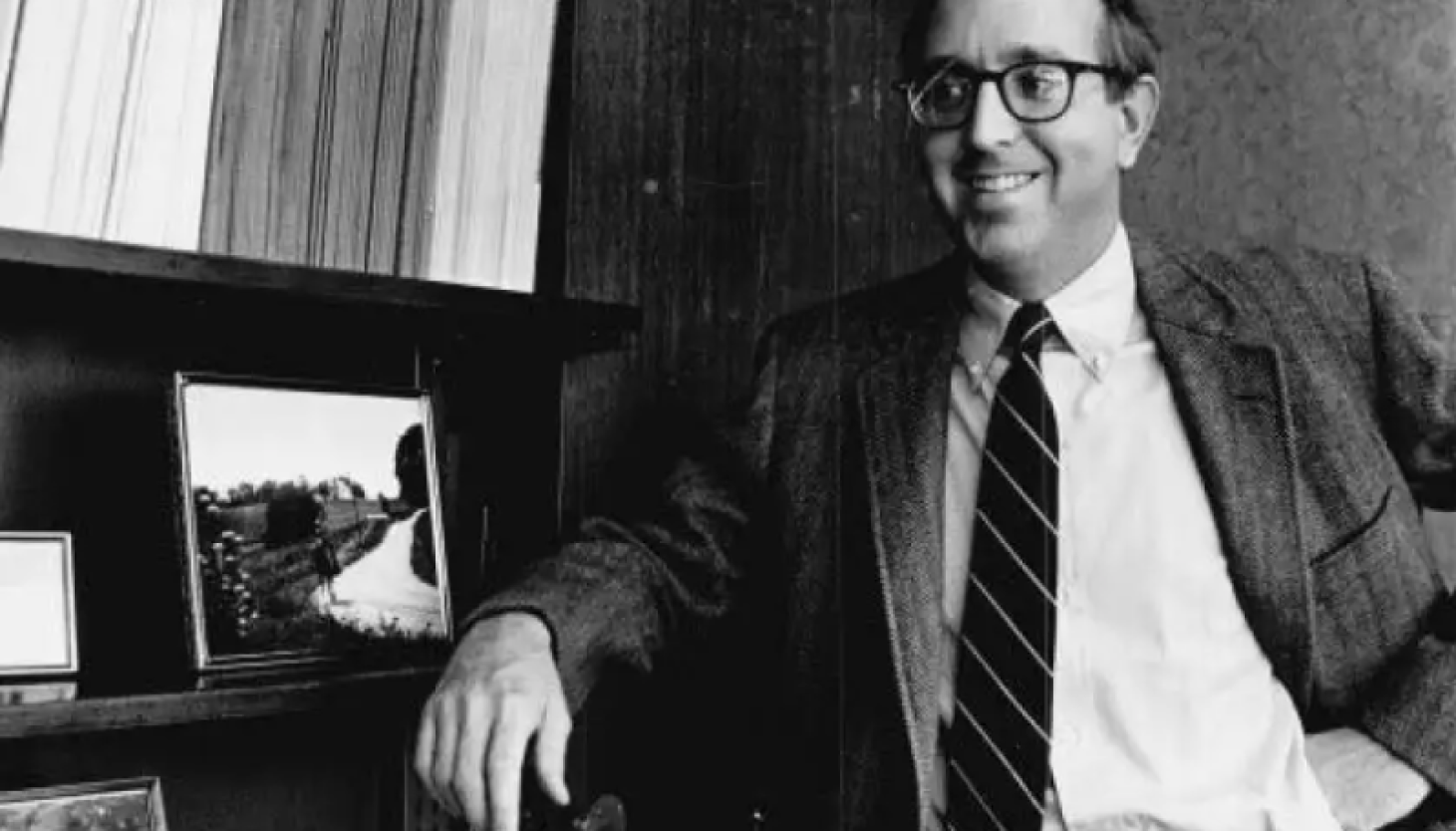
Richard Posner, longtime federal judge and ‘prolific’ University of Chicago legal scholar, dies at 87
Richard Posner, a former federal appellate judge and University of Chicago law scholar who became one of the most cited legal scholars of the 20th century, died Tuesday.
His death was confirmed by the University of Chicago. He was 87.
Posner made it known he detested jargon-filled legal writing and leaned into practical solutions for complex legal questions in the nearly 3,300 legal opinions he penned during his 36-year stint on the bench. In his lengthy career, and even into retirement, Posner authored more than 60 books and dozens more legal journal articles.
University of Chicago Law School Dean Adam Chilton said: “There has never been a legal scholar quite as prolific, influential, and endlessly curious as Dick Posner.”
“He was a giant whose influence on our legal system, the field of law and economics, and on our law school cannot be overstated,” Chilton said in a statement. “As a law and economics scholar and torts professor, I doubt there has been a week that’s gone by since I started teaching at the Law School where I haven’t talked about one of Dick’s ideas or opinions. We will mourn his loss deeply, and on behalf of the entire Law School community, I extend our deepest condolences to his family.”
Posner’s law journey began as a clerk for Supreme Court Justice William J. Brennan. From 1965 to 1967. He served as assistant to future Supreme Court Justice Thurgood Marshall.
Posner joined the University of Chicago’s law school in 1969, and just four years later, wrote “Economic Analysis of Law,” largely held as an extremely influential book in the field.
By 1978, he was made the Lee and Brena Freeman Professor of Law, a role he held until he was appointed to the U.S. Court of Appeals for the Seventh Circuit by President Ronald Reagan in 1981. Posner served as the chief judge from 1993 to 2000.
Among his thousands of legal opinions were rulings overturning same-sex marriage bans in Indiana and Wisconsin in 2014, along with a 2013 decision to block a Wisconsin abortion ban.
Posner also wrote the majority opinion in a ruling that struck down an Illinois ban on concealed carrying on public transit, a decision state lawmakers later worked around. He also made his disdain for ATF stash house raids known in a 2012 dissent.
He later retired from the bench in 2017, saying he looked forward “to continuing to teach and publish, with a particular focus on social justice reform.”
“I am proud to have promoted a pragmatic approach to judging during my time on the Court, and to have had the opportunity to apply my view that judicial opinions should be easy to understand and that judges should focus on the right and wrong in every case,” Posner said in a statement at the time of his retirement.
He is survived by his wife Charlene, two sons and four grandchildren. The details of services are pending.