Bald Eagle Euthanized After Lead Poisoning; Onlookers Take Selfies
A bald eagle suffering from severe lead poisoning was euthanized after being discovered at a Pennsylvania state park, where visitors reportedly took selfies with the weakened bird instead of seeking help, according to a wildlife rescue organization.
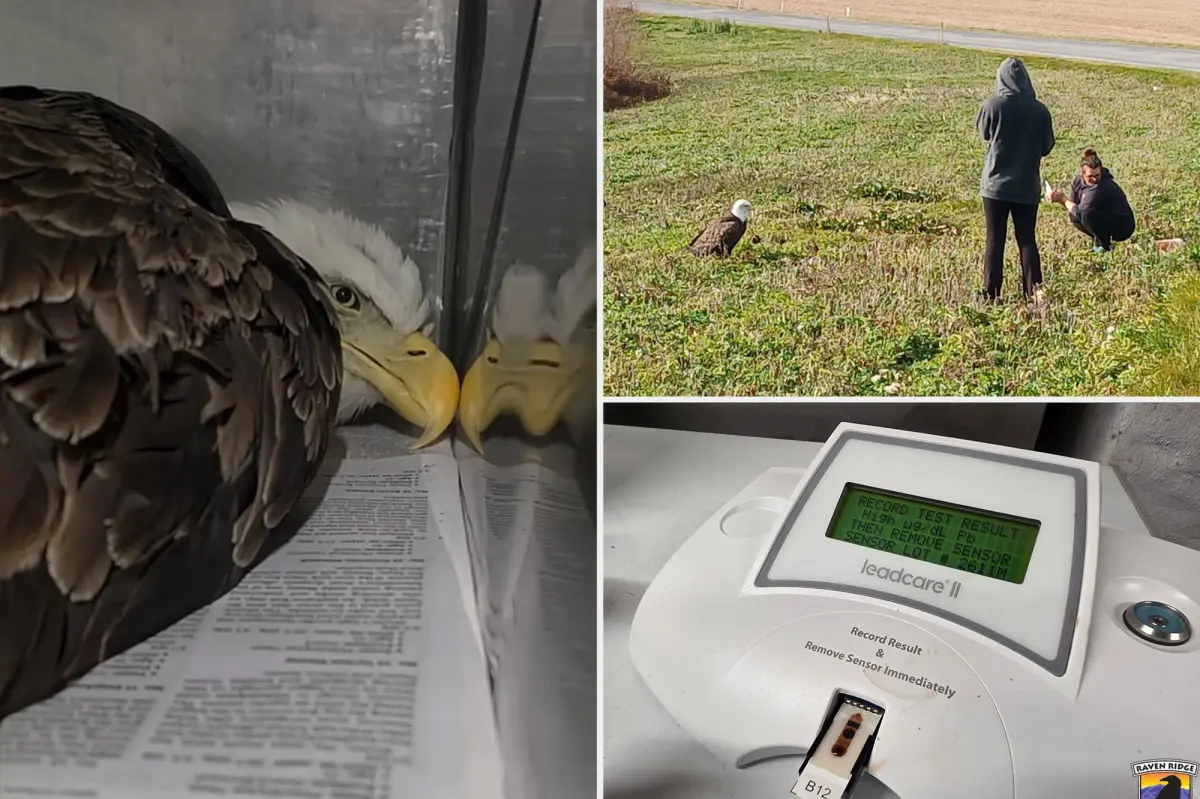
The injured raptor was recently recovered at Codorus State Park after a passerby reported seeing it near a roadway. The bird was unusually willing to let people come close, Raven Ridge Wildlife Center said in a Facebook post.
“If you can approach a bald eagle within arm’s reach, something is seriously wrong,” the organization said. “Bald eagles are wild animals and normally keep their distance from people.”
The center warned that a bird allowing people to get so close may be injured, sick or experiencing another form of distress.
When rescuers reached the eagle, it was gasping and struggling to breathe. The damage was considered irreversible, the center said.
Blood tests revealed dangerously high lead levels in the eagle’s body—so elevated that they surpassed the testing machine’s measurable range, according to Raven Ridge.
With no realistic prospect of recovery, the center made the difficult decision to euthanize the bird humanely to end its suffering.
Raven Ridge said the eagle may have been grounded for several days, raising concerns about how long it had been struggling before anyone reported its condition.
“Instead of contacting someone who could help, numerous people approached the eagle for photos and selfies,” the wildlife center said. “They appeared more focused on getting close than recognizing that the bird was in trouble.”
MORE ON THIS: Chris Kacher Left Message Before Fatal Sierra Towers Fall
The organization also noted that intentionally disturbing or harassing wildlife may violate state wildlife protection laws. Raven Ridge contacted the Pennsylvania Game Commission for assistance with the rescue.
“Wild animals should never be treated as photo opportunities,” the group said.
Investigators suspect the eagle was poisoned after eating a deer carcass containing lead ammunition. The bird had reportedly been feeding alongside another adult eagle and two younger birds, which were likely part of the same family.
By the time rescuers arrived, the deer carcass had disappeared, leaving experts unable to test the remains for lead contamination.
“We can only hope the other three eagles do not suffer the same fate,” Raven Ridge said.
The wildlife center is urging hunters to choose non-lead ammunition and reminding the public to learn the signs that an animal may be injured or in distress.
“If you encounter wildlife that appears to be in trouble, put the animal’s welfare ahead of getting a photo,” the organization urged. “Do not crowd it or move closer. Call for help and report what you observe.”
Raven Ridge also asked park visitors to “give wildlife a chance,” emphasizing that a single phone call can sometimes mean the difference between life and death.
“We cannot change what happened to this bald eagle, but we can share its story to educate others and help prevent a similar tragedy,” the group said.