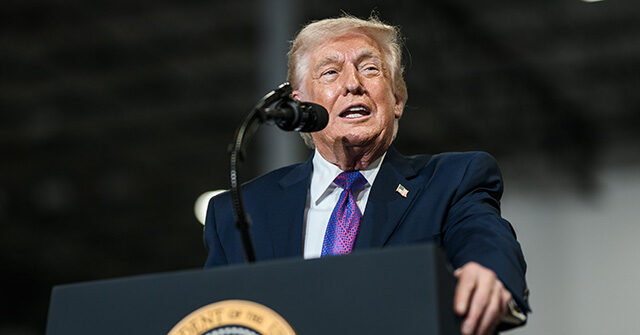
Trump Predicts Bipartisan Cooperation on Health Care
President Donald Trump told reporters Thursday at his Mar-a-Lago estate that he anticipates a “very bipartisan relationship” with Democrats on health care and other issues.
Trump said Democrats have been contacting him because he holds veto power, adding that he expects to work well with the incoming Democratic majorities.
“Maybe more than would have gotten done the more traditional way. It’s happened before,” he said.
The president described the veto as a significant authority and mentioned it alongside the pardon, which he said are frequently regarded as the most powerful tools available to a president. Trump emphasized that he is “not looking to veto everything for two years” and said Democrats would not want that outcome either.
Trump spent the holiday in Florida, where he and first lady Melania Trump participated in a Thanksgiving call with service members stationed overseas.
CHECK THIS OUT: Pregnant New Mexico Inmate Escapes Corrections Vehicle, Remains at Large
Senator-elect Abdul El-Sayed (D-MI), who defeated Republican Mike Rogers this month, has spent the weeks since the election seeking Trump’s support for a single-payer bill he proposed renaming “TrumpCare.” On Saturday, Trump reposted the Michigan Democrat’s mock-up of a gold “TrumpCare” card on Truth Social without adding a caption. In a Nov. 17 video, El-Sayed referred to the president as “habibi,” an Arabic term of affection, and said the rebranded proposal polls well. Just weeks earlier, he had called Trump an “unserious fool.”
The White House dismissed El-Sayed’s proposal when he initially presented it. Spokeswoman Allison Schuster characterized it as a socialist government takeover that “should really be called ‘Medicare for None.’”
Trump told the New York Post on Tuesday that he intends to meet with the incoming senator about the plan, saying there could be “some place in the middle that we could go.”
Support for the policy varies depending on how the question is framed. A KFF survey conducted in September found that 66 percent of adults supported a national health plan, up from 53 percent in 2020, while 66 percent of Republicans opposed it. An Axios/Ipsos poll that month found support fell to 43 percent after respondents were told the program would largely replace private insurance; 24 percent opposed it and 32 percent were undecided.