Spain High-Speed Train Collision Kills 42 and Injures Hundreds
Spain High-Speed Train Collision Overview
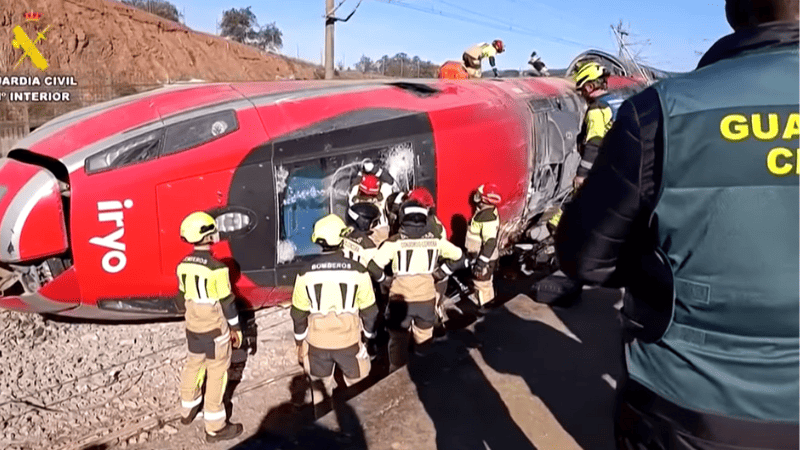
A Spain high-speed train collision near Adamuz, Andalusia, killed at least 42 people and injured over 290 passengers, officials confirmed on January 20, 2026. The crash involved an Iryo train traveling from Málaga to Madrid and a Renfe Alvia train heading from Madrid to Huelva. The rear carriages of the Iryo train derailed and blocked the oncoming Renfe train’s path, making this one of the deadliest rail disasters in Spain in over a decade.
Details of the Spain High-Speed Train Collision
The collision occurred around 7:45 p.m. local time on January 18, 2026. Preliminary findings point to a broken rail joint, which likely caused the derailment of the Iryo train’s rear carriages. Both trains were traveling within the speed limit. Transport Minister Óscar Puente described the derailment on a straight, flat track as unusual, since the section had been renovated in May 2025.
Witnesses reported a sudden impact, with carriages crumpling and debris strewn along the tracks. Rescue teams faced cold weather and difficult terrain while reaching trapped passengers. Officials stressed that prompt action saved many lives despite the scale of the disaster.
Emergency Response to the Spain High-Speed Train Collision
Emergency crews, including firefighters, medical teams, and the Civil Guard, responded immediately to the Spain high-speed train collision. Volunteers from nearby towns helped transport victims and provide blankets and supplies. Medical teams triaged survivors at a temporary field hospital in Adamuz. Critically injured passengers were moved to hospitals in Córdoba, Seville, and Málaga.
Doctors treated dozens of patients on-site and admitted at least 12 to intensive care units. Family support centers helped relatives locate missing passengers and submit DNA samples for identification. Recovery operations shifted smoothly from rescue to retrieval as conditions stabilized.
National Mourning and Government Response
Following the Spain high-speed train collision, Prime Minister Pedro Sánchez declared three days of national mourning, calling it “a day of sorrow for all of Spain.” King Felipe VI and Queen Letizia visited the crash site and local hospitals, offering comfort to victims’ families and emergency workers.
The Transport Ministry pledged a full investigation. Minister Óscar Puente reassured the public that authorities would examine all infrastructure and operational procedures to prevent similar incidents. Officials emphasized lessons learned from the collision would improve rail safety nationwide.
Impact on Rail Services
The collision caused significant disruptions to high-speed rail services in southern Spain. Adif, Spain’s rail infrastructure manager, suspended trains between Madrid, Seville, and Málaga while conducting safety inspections. Officials imposed temporary speed limits on several lines.
Passengers faced rerouting via buses and flights arranged by multiple operators. Rail unions and safety experts urged a comprehensive review of infrastructure and maintenance practices. Spain’s high-speed rail network has operated safely for years, making this incident particularly alarming.
Community Response and Survivor Accounts
Local residents in Adamuz and nearby towns offered blankets, food, and guidance to rescue crews and survivors. A local volunteer used a quad bike to transport injured passengers and assist emergency workers.
Among the survivors is a 6-year-old girl who escaped with minor injuries despite losing family members. Her story highlighted the human impact of the Spain high-speed train collision. Memorials and vigils have been held across the region to honor victims, showing community solidarity in the aftermath.
International Reactions and Expert Analysis
The Spain high-speed train collision drew international attention. World leaders expressed condolences, and rail safety experts emphasized the importance of monitoring high-speed infrastructure. Media outlets noted that Spain’s rail system had been considered one of the safest globally, making the collision particularly tragic.
Experts highlighted the catastrophic potential of infrastructure failures like broken rail joints, stressing the importance of routine maintenance and monitoring. Rail operators worldwide are studying the incident for lessons that could improve safety.
Investigation and Next Steps
Spain’s Commission of Investigation of Rail Accidents (CIAF) continues examining the wreckage, focusing on track conditions, rail maintenance records, and train data recorders. Early results indicate the Spain high-speed train collision likely resulted from infrastructure issues rather than human error.
Officials plan to release findings progressively and ensure transparency. Authorities also emphasized that lessons learned will strengthen safety measures across Spain’s high-speed rail network. Recovery teams continue removing wreckage and clearing debris to restore rail service.